Our last day on the road! At least for a while. We are three days short of a full four weeks on this adventure. Abby just needs to get us 99 more miles before she gets to rest. We need to be in Davis by 1:30 to meet our landlord Karen and collect keys. Should be easy right?
Looking at the map, we notice we pass through Concord, CA. Which just so happens to be the home of a More Beer flagship store. That is just too tempting to pass up. So we stop. And fritter away time deciding what all grain kits to purchase (our recipe books are in the trailer, somewhere, so to take it easy on our travel fried brains, a kit it is). Alex plays happily with the assortment of toys and chalk that the store has in child friendly area, so we have some uninterrupted shopping time. We finally pay attention to the time and realize Google Maps estimates we have 75 more minutes of driving. Quickly adding 10% to that time to account for Abby’s slower speed, we realize we should have left 5 minutes ago. We weigh our grains, pay, collect Alex, and return to the road.
We make relatively good time, even after stopping to pay a $15 toll for I-80. The road after the toll was smooth, so it is money well spent. We arrive in our new neighborhood, immediately dropping home values with road grime covered Abby and trailer. After going through the house with Karen and paying February rent, we squeeze Abby and the trailer in the driveway and start unpacking.
It is a bit surreal standing in a kitchen that is approximately 3 times larger than the living space we have in Abby. Not being able to get milk out of the fridge while sitting at the dining room table is going to take some getting used to.
It was Tuesday! Jess was in class, Alex was in daycare, the sun was shining, and Dave took full advantage to brew. The selected beer was a simple Imperial Porter from Experimental Homebrewing (Beechum and Conn, pg 122) as a combination dry malt extract (DME) and grain brew (see below for malt extract/grain bill).
The milled grains were steeped at 70 degrees Celsius for 20 minutes. 6 lbs of DME was dissolved and the sweet wort was boiled for 60 minutes. Hops additions were at 4o and 10 minutes. Wort was cooled to 20 degrees Celsius and the wort was inoculated with a 1.1 L of a 36 hour starter culture. Wort was aerated with oxygen for three 30 second intervals. The Speidel 30L HDPE fermenter was transferred to a 20 degree Celsius incubator. Original gravity was 1.083.
Graph of specific gravity of Imperial Porter wort.
During fermentation, specific gravity readings were taken at approximate 12 hour intervals and graphed. The final gravity achieved by fermentation was 1.010, reached by Thursday evening. On Saturday, we decided that we would transfer the Imperial Porter to a secondary fermenter and add vanilla bean (usually we just use our keg as our bright tank). Bourbon will be added at kegging, so the final beer will be a Bourbon Vanilla Imperial Porter.
What went well?
The starter culture gave led to a vigorous fermentation. Happy yeast make good beer.
Our set up. Everything went smoothly on Dave’s second brew on the system. Hoses weren’t falling on the ground and everything was consolidated in a single location.
The extract kit with specialty grain steep was easy. Doesn’t mean we are giving up whole grain, but when you need to save some time or perhaps your mash tun isn’t quite big enough to handle doubling the grain bill, DME as substitute for the base malt is easy.
Taking the gravity at intervals. It is nice knowing how the fermentation is progressing.
What went poorly?
Missed capturing some information (hop alpha acids %, weights, yeast lot number, amount of water used) but we are working on a spreadsheet to capture all the data. Yes, there are programs, but why go electronic when there is good old paper and pen?
Not that this went poorly – we are just going to have to wait ~ 2 to 3 more weeks before we can taste. Patience. Bah!
Recipe
6 lbs DME
2.75 lbs Munich Malt (10L)
1.6 lbs Brown Malt (70L)
1.38 lbs Chocolate Malt (350L)
1 lb Crystal Malt (120L)
0.5 lb Crystal Malt (60L)
0.75 oz (?) Magnum Hop Pellet (40 minutes)
0.5 oz (?) Progress Hop Pellet (10 minutes)
Whirlfloc (10 minutes)
2 vanilla beans, scrapped (into secondary) and chopped (into secondary)
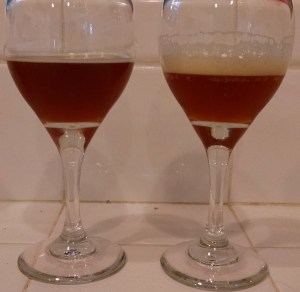
Two temperature mash on left, single temperature on right.
So an update on our poor, under-attenuated amber ales. We have been discussing dumping them because we are going to need the kegerator space. However, they earned a reprieve when 1. our bitter chocolate oatmeal stout keg kicked and freed up space and 2. we decided to make a vanilla bourbon stout that will need to be racked for 10 – 14 days. So, the amber ales survive!
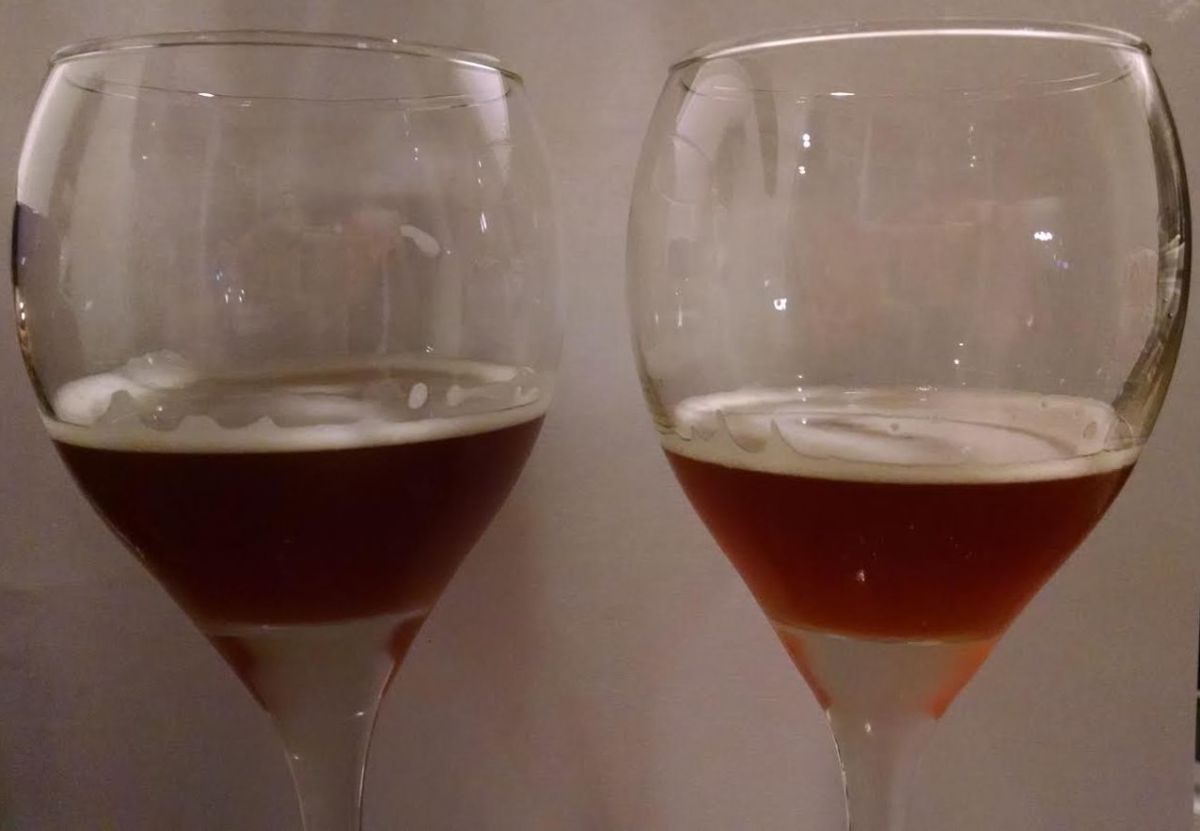
We decided to see if anything has changed in the past week since our first tasting and we were pleasantly surprised! The picture doesn’t do the clarity justice (a light box will be added to the to be purchased list), but the beer is clear! Especially the single temperature mash. We are also pleased the quantity and stability of the single mash foam. These two beers were poured within a minute of each other and the picture taken within a couple minutes of pour. The flavor of both beers is still sweet and under-hopped. The two temperature mash has a drier finish hidden under the residual sweetness.
So what to do next? Since their dates with drain destiny have been placed on hold, we might as well dry hop the amber ales and see if they improve.
Our lightest mileage day by far! Why not push on to Davis and get into our rental? We had an additional visit built in to our itinerary, but it was cancelled at the last minute. Rather than inconvenience our landlady, we opted to stay another night on the road. We have stayed in the area previously and wanted to come back. And the nice thing about a short drive is we can have a leisurely morning.
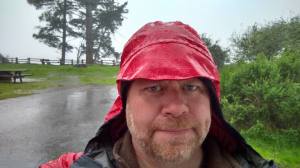
Water action shot!Happiness is running through a puddle.Dave enjoying the rain while breaking camp.
It rained rather vigorously overnight and we woke up to lots of puddles. Alex had a wonderful time splashing in puddles and just enjoying the morning. As always, good things must come to an end and we need to leave before we overstay check out time. But, we also need to kill time before we can check in at Half Moon Bay State Beach. And it has started to rain again. So what to do with a toddler and rain when all you have is an RV?
Alex at the Santa Cruz Children’s Museum of Discovery.
We decide to go to the Santa Cruz Children’s Museum of Discovery, located in the local mall. We are there about 15 minutes before the museum opens, so we wander about the mall while avoiding the walkers. Alex discovers that a mall is a fabulous echo chamber, much like Carlsbad Caverns and really exercises his lungs while practicing his screeches. After an eternity, the museum opens and Alex settles in with the kinetic sand and Lego cars and has a really great time. 90 minutes occupied, we head back to Abby and grab lunch. We get to witness two gentlemen yelling at each other in a travel lane after what seems to be a minor fender bender. Nothing like creating a risk of a larger accident so you can chew some one out in traffic.
We arrive at Half Moon Bay State Beach and find our campsite. Be sure to have your reservation number handy, the park ranger actually asked for it upon check in. We get settled and discover that the beach is just on the other side of the dune. Unfortunately, no pets allowed so the pups stay in the RV while we take Alex to the beach. He really does not like sand in between his toes and insists on being carried. We head back to Abby to get Alex’s wagon and take the pups to the dog beach. There is a coastal walking trail that dogs are allowed on and it is about a 20 minute walk to the dog friendly beach. But what they don’t tell you is the coastal walkway is on along a cliff edge that with recent rains, has erode. Nothing to undermine the path, but getting very close to the path and is not safe with a curious toddler that doesn’t want to stay in his wagon. We decide to head back to Abby and play the fun game of ‘Identify the Source of the Dog Urine Smell’. Which just happens to be Buster’s bed.
We are on the road again! We take a leisurely morning to get underway, and we still break camp faster than the boy scouts and are impressed with ourselves. Today is a low mileage day but a long hours day. We are flogging Abby up the Pacific Coast highway and through Big Sur today.
Day starts out overcast and pretty gentle in regard to terrain. Only thing we have to content with are the elephant seal tourists. What are they you ask? Apparently it is the high season for viewing elephant seals. They come right out of the water and relax along the coast. The tourists do some crazy late braking to get into their ideal turn out for viewing. Makes driving behind them in Abby with the trailer quite interesting. The elephant seals are impressive. While we do not stop, we have plenty of opportunities to view them.
Once we reach Ragged Point, the road becomes more interesting. The grades increase and so do the twists and turns. To add to the challenge is what started out as a grey and overcast day has become rain. Nothing torrential, but enough to be increase the level of difficulty. We will keep our complaints to a minimum. California desperately needs the rain after a decade of below average winter rain totals and snow pack, with the last 4 years being especially devastating. It would be nice to see the view, but there will be other trips.
We stop for lunch at Nepenthe in Big Sur. Despite the weather, it was still a 30 minute wait for a table which Alex happily spent splashing in puddles on the viewing deck. The view was only of clouds and drizzle, but the puddle selection is extensive. Being original people, Dave and Jess both got the Ambrosiaburger and the ‘adult’ hot chocolate. Alex loved the fresh squeezed orange juice. Getting on the road after lunch, we look at the map and realize we are only halfway through our day. And it took 3 hours to achieve the half way point. Speedy we are not.
Alex looking at the Pacific.
We arrive at New Brighton Beach State Park after the entrance station has closed. We find our spot and do a quick loop around the parking lot to discover that a spot on the bluff is available. We grab it and fall asleep that night to the Pacific and rain on Abby’s roof. The next morning we wake up to sun and discover the site we are in is only available for one night. Also, the state of California classifies out-of-state checks as ‘foreign’. We find out there are different bluff overlook spots available Monday night, so we cancel our inland spot and take the second spot on the waiting list. We have to be back at the entrance station at 2 pm for a chance at one of the premium spots. We head out and about into Santa Cruz.
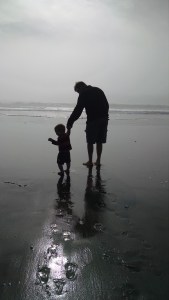
Dave and Alex walking across the beach.Dave and Alex checking out the sand.
The day is turning out quite nice, so we head down to the boardwalk. The rides have not opened for the day, but that is not our goal. We want to dip Alex’s toes into the Pacific. Alex seems to be a little bit overwhelmed, but with some coaxing, walks with Dave towards the ocean. He is less than impressed when the waves wash over his toes
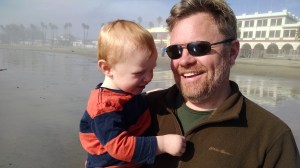
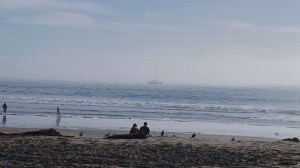
Happy men.Sailboat
and wants to be picked up. Beach fun over, we head back to Abby and the dogs to sort out lunch plans. We originally wanted to go to Sante Adarius, but the trip coordinator overlooked the fact that the brewery is closed on Mondays. Whoops. Nils, who used to live in the area, recommended Santa Cruz Mountain Brewing (SCMB). They do allow dogs in their outside beer garden, but our three fur beasts are too much to control with Alex. Back to Abby the pack goes.
SCMB event for women.Beer.
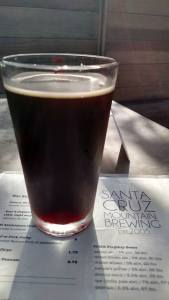
SCMB makes fabulous beers. On the recommendation of Nils, we try the chocolate pumpkin beer and enjoy it immensely. We get a growler to go. SCMB partners with Kelly’s French Bakery for food service. And the food is absolutely delicious. We are very glad we stopped here for lunch. We look at the time and need to get to the park entrance station for the opportunity to get a new spot.
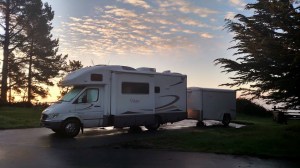
Abby at New Brighton Beach State Park.
We arrive at the entrance station with about 5 minutes to spare. Promptly at 2 pm, the ranger does a roll call of the waiting list. The people at the top of the list selects their new spot – and it is not our preferred pick! We grab our preferred bluff spot and head off to our new site, which is larger a more private than our previous night’s spot. We wander down the trail to the beach with dogs and Alex. Chewie is rather unsure of the ocean and Penny is willing to get her feet wet. We spend the rest of the day relaxing.
The new toys arrived today! So what did we purchase and why?
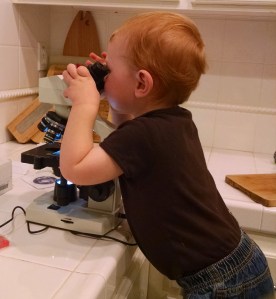
Alex checking out the microscope.
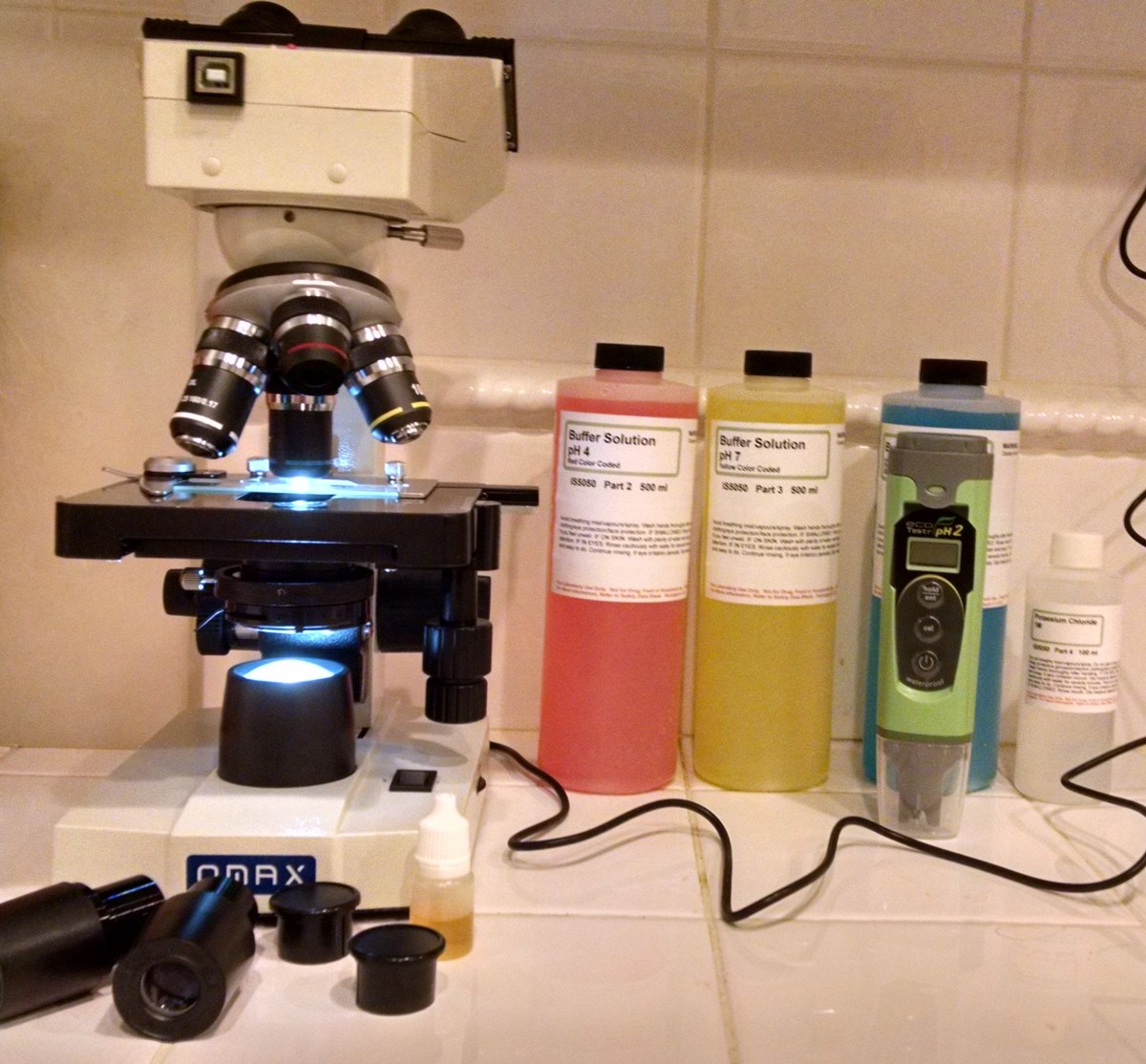
Bright-field microscope (OMAX CS-MD82ES10) with a 1.3 MP digital camera built in. Combined with a hemocytometer, we will be able to perform cell counts (with the hemocytometer) and standardize our pitching rate. Everything we do needs to be consistent. So we need to start good QA/QC practice early. Speaking of starting early, Alex go in on the microscope action too.
Oakton Ecotstr pH meter. Also picked up calibration buffers. This is great for testing yeast viability. Set
A future microbiologist (?) taking a his first look through a microscope.
up a small culture, pitch some yeast, monitor how fast the pH drops. The faster the drop, the more viable the yeast culture. This can also be monitored by weighing the starter culture. As CO2 is being evolved, the culture will decrease in weight. Just need a good balance and to remember to weigh the culture immediately after pitching the yeast. A good quality laboratory balance is more expensive and will be purchased at a later date. pH meter will suffice for now.
A hemocytometer. Simple, a specialized microscope slide with a grid pattern and reservoirs with a very specific volume. Used for cell counts. Should be delivered on Monday.
Jess is going to go scrounging at the UC Davis surplus store for some general laboratory supplies like a pipettor or two, tips, a pipet aid, some serological pipets, test tubes, and pretty much anything that catches her eye and has a good price on it. If it isn’t at the surplus store, back to Amazon we go! That’s right, we got everything on Amazon. Also, check out MicroscopeNet, this site is where we originally found the microscope we ordered from Amazon. Why Amazon? We already have a Prime account with them. It was easy.
This is a continuation of the home brew we started February 28, 2016.
Fermentation was finished by March 3, 2016 and we sampled the beer to obtain the gravity reading. We then dropped the temperature to -1 degree Celsius to facilitate chill haze formation and precipitation on March 4, 2016. We transferred to kegs on March 7, 2016 after Alex went to bed.
We tasted the beer on March 13, 2016 with Jesse, a friend and classmate.
Amber Ale Two Temperature Mash Stats:
Original Gravity: 1.0611
Final Gravity: 1.027
%ABV: 4.46
IBU: 41
Amber Ale Single Temperature Mash Stats:
Original Gravity: 1.0663
Final Gravity: 1.0298
%ABV: 5.12
IBU: 41
Notes:
The final gravity it is clear we did not achieve full attenuation (~1.015).
It is not surprising the aroma is very malty with very little hop aroma.
Color is amber with a hint of red. Two temperature mash may be a bit darker.
Beer is cloudy.
Both beers live up to their malty aroma in flavor and are sweet. Very little hop bitterness is evident.
The two temperature mash is dryer than the one temperature mash, but with the poor attenuation, difficult to distinguish.
They are not bad . . . but they aren’t exactly good. Both beers are an excellent example of how bitterness from hops make beers drinkable by balancing the sweetness.
Beers are drinkable if done in small amounts. Should not be paired with sweet foods.
Single temperature mash is preferred.
Plan of Action:
Jesse talked us out of our panicked throw the kitchen sink at the next brew and got us back to a place of logical thinking.
What we know: poor attenuation, acetaldehyde aromas during fermentation, hint of diacetyl in finished beer. Yeast were pitched directly from the pure pack (no starter) and aeration was done by shaking the fermenter. We used WLP002 (British Ale yeast)
What this points to: Unhappy yeast because of lazy home brewers. Which is frustrating because we were careful in other aspects of our experiment.
What we will do for the next brew:
Use a starter culture. ~1.5L for a 19L fermentation.
Consider aeration of the wort with an aeration stone and oxygen (we just got a new oxygen tank).
We will hold off on any bittering hop additions on the theory that the sweetness is overwhelming the bitterness.
We will add more aroma hops at the end of the boil.
We will take more frequent gravity measurements to better track fermentation.
Hello to three weeks on the road! We are in the home stretch now and getting a bit antsy. Today we make our turn towards the north and head up the coast. We have to hang the right, otherwise Abby’s tires will get wet in the ocean.
It is going to be a long day on the road, so we are up and out for an early start. Because Jess likes the morning shift, she gets to drive through LA. Alright, technically not the heart of LA, but to the north on 210, but close enough. We are surprised that at 100 miles out from LA and we are already on a ten lane road (5 in either direction) and, that on a Saturday morning traffic was surprisingly heavy.
We push on, an make it through LA. We decide to stop for lunch and realize we are only halfway to our destination and it feels like we have been on the road all day. We find an In-N-Out Burger to see what all the hype is about. The parking lot is small and we replace conversion van towing a trailer and take up six spots. The line is impressive, but not surprising given it is noon and this seems like a popular spot for sports teams after their morning games are finished. Maybe it is because we don’t know about the ‘secret’ menu yet, but color us unimpressed. Instead of saying what you want on a burger, you get to tell the cashier what you want left off a burger. There’s not a lot on it, so if you aren’t a picky eater, the list won’t be long. If you are a picky eater, the list won’t be long either. Our burgers and fries in hand, we had back to the RV and head over to Costco to eat and do some stock up shopping (We are out of Greenies, have been for over a week and have been on the receiving end of some very dirty looks from the dogs.)
Leaving the In-N-Out burger experience for a moment, let us shift topics to Costco in California. The selection and quality of goods is quite impressive. The outdoor furniture selection is extensive. There is significant amounts of organic produce and the baked goods aisle . . . just amazing. No time for gawking though, we need to shop at get back on the road.
Returning to the In-N-Out burger, opinions averaged a slightly positive ‘meh’. Dave enjoyed the burger more than Jess, who thought the hype was overblown for the equivalent of a McDonald’s burger. Agreement was reached on the fries; they are abysmal. Just go to Five Guys.
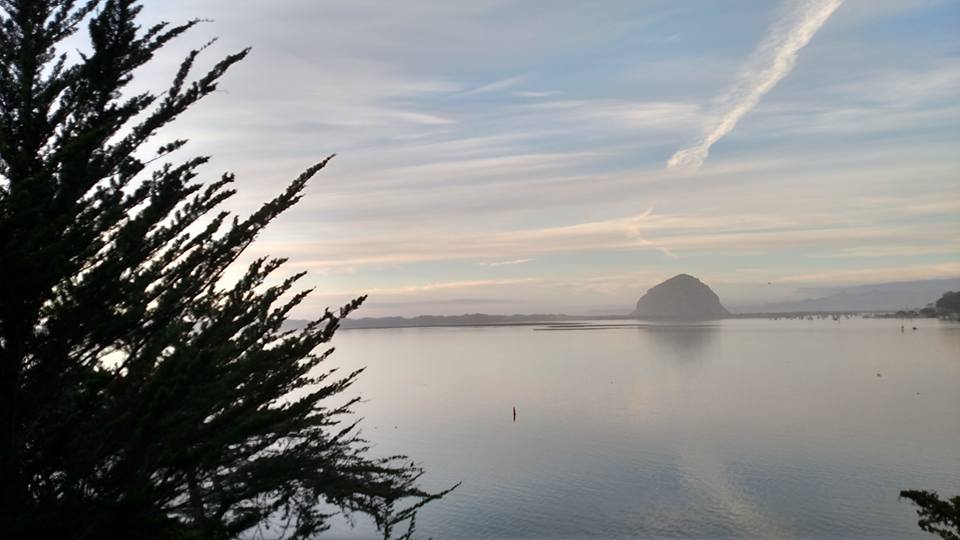
We arrive in Morro Bay State Park around 5 pm. Tired and a couple cars ahead of us at the entrance station is an RV that is truly struggling with the idea that there are no available sites for a walk-up camping. Looking at the brimming campground, we realize it is a long weekend due to Martin Luther King Day. We pull into our site to find that we are surrounded on all sides by a Boy Scout troop, who have spilled over into our site. Rules regarding maximum campsite occupancy are being egregiously flaunted. Whether this is due to the holiday weekend or is the normal state of this campground, we cannot say. The showers were meh. Difficult to control the temperature and the shower heads are difficult to aim so you are not pressed up against the wall. The positive is the showers and bathrooms are single uni-sex stalls. Also, make sure you have quarters, since these are coin operated showers.
We have no complaints with the sunset. The campground is along a golf course that is part of the park. And we are able to take the dogs for a nice walk among the trees at the edge of the course as Alex plays on the logs.
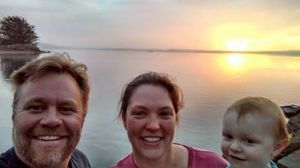
Alex at sunset along Morro Bay.Family selfie during sunset at Morro Bay.
Destination: Jumbo Rocks Campground, Joshua Tree National Park
Route: I-10W, National Park Roads
Mileage: 133 miles New state: California
Dutch and his pup.
It is time to hit the road again! But before we go we spend the morning hanging out with Marilee and the Toyota crew. They are great people and it is educational to check out their rigs to see the modifications they made and pick up tips on living in a condensed space. One such person is Dutch. A Texan who met his wife in Colorado (where she is visiting family at the time of our stop in Quartzsite), they sold their house and became rubber tramps a couple of years ago. Great person to get ideas from and learn about full-time RV living. We finish up our time in Quartzsite chatting with Marilee; we need to leave in relatively good order so we can grab a site in the first come first serve Jumbo Rocks campground.
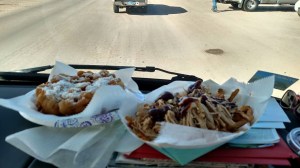
Lunch of champions: pulled pork fries and funnel cake.
As we are leaving, we decide to stop at our favorite food truck and get lunch for the road. Abandoning the poutine, we opt for the pulled pork fries and the funnel cake. Lunch of champions people. Alex got fries and pulled pork, but fruit is substituted for the funnel cake. Alex falls asleep with bits of pork on his shirt, which Penny so kindly cleans (very gently, can’t wake the toddler) off of him.
Follow the green signs!Hello California! So glad we made it.
As we approach the highway, it is straight ahead, at full speed! California, here we come! Approximately 30 minutes on the road, we see the sign we have spent 20 days driving towards – the California state line! We still have a hurdle to cross before we can be officially admitted into the state – the agricultural inspection station. As we slow down to stop, the agent just waves us through and seems annoyed that we slowed down. Onward!
We reach exit 168 that will take us into Jumbo Rocks. As we are approaching the park entrance, who do we see boon-docking on BLM land? The Wynns from Gone with the Wynns! The solar array on their motorhome and teal logo on their smart car are pretty solid identifiers. Full-timers in a class A, we have picked up helpful tips and hints from their website. Especially in the regard to solar power and coach batteries. A quick stop to say hi and thanks for the inspiration, and we are on the road enter Joshua Tree National Park.
Joshua Tree is located where the Mojave (western half of park, 3000 feet plus above sea level) and Colorado (eastern half of park, below 3000 feet above sea level) deserts converge. Mojave flora includes pinyon pines, junipers, scrub oaks, Mojave yuccas, Mojave prickly pear cacti, Parry’s nolina, and, of course, the Joshua tree (a species of yucca). Mojave fauna includes antelope ground squirrel, yucca night lizard, black-tailed jackrabbit, common raven, American kestrel, loggerhead shrike, red-tailed hawk, Scott’s oriole, western screech owl, and the southwester speckled rattlesnake. The Colorado desert’s flora includes palo verde, ocotillo, smoke tree, brittlebush, chuparosa, sand verbena, pencil cholla, and dune primrose. The kit fox, kangaroo rat, zebratail lizard, LeConte’s thrasher, tiny checkerspot butterfly, and the western diamondback rattle snake are the fauna that inhabit the Colorado desert.
The piles of boulders are impressive to see. The rocks are granite, formed by magma intruding on the Pinto genesis formation underground. As the granite cooled, horizontal and vertical cracks were formed. As the granite was uplifted, ground water caused chemical weathering, which widened the cracks and rounded the edges. The soil eroded, resulting in the heaps of monzogranite seen today.
We arrive at Jumbo Rocks, and there aren’t many spots left. Fortunately, there are a couple of other campground options that we drove by that seemed sparsely populated with campers. Luck was on our side, and we found a spot to wedge ourselves into. Not nearly as bad as our first night at Big Bend, but not ideal. After we settle in, we take a short hike to Skull Rock. Nothing too strenuous and it gets us out of the RV after the day’s drive. We don’t want to be gone too long since there is a special program at the amphitheater tonight.
While we are eating dinner, there is a knock on the door. It was Ranger Doug informing us about the program at the amphitheater. We had planned on going, hence the early dinner time, and finish up so we can be on time. The desert night is a bit chilly, so we bundle up and walk to the amphitheater. Ranger Doug is traveling across the country informing people about the posters the WPA (remember those school lessons about the New Deal?) printed for the National Parks between 1938 and 1941. Many of the original posters have been lost or forgotten in archives. Multiple versions for a single park have also been discovered. It is a fascinating talk at the time and effort into the reproduction process is staggering. If the opportunity presents itself to hear Ranger Doug speak, one should seize it; he is enthusiastic in his mission and knowledgeable. As always, it is early to bed, for what we hope is an early to rise.
It has been a month since we last brewed, and we need to have the new beer ready before the previous batch runs out. Today we have two objectives.
The inaugural brew on our new set-up and test the ice bath as an effective chilled water source for cooling wort.
Test the effect on beer flavor of mashing in at ‘protein-rest’ temperature (~45 degrees Celsius) vs mashing in at conversion temperature (~65 degrees Celsius).
Objective one was completed rather successfully. The system needs further optimization, but overall, the brew day went very smoothly. We discovered we could not fit the brew stand through the gate to the back yard. So we brewed in the driveway. We met more neighbors in a few hours of brewing than we had in an entire month. We were able to cool 4 gallons of wort to 20 degrees Celsius with 5 gallons of water with 10 pounds of ice. The water out from the heat exchanger was added back to the ice bath. By the time the wort was cooled, the ice had melted, but no significant increase to the water temperature was observed. Got to love the isothermal nature of a phase change.
Objective two is to determine if a low temperature ‘protein-rest’ will affect the beer flavor/aroma/mouth feel. We are more concerned with residual B-glucanase activity. Depending on one’s school of thought, this enzyme might have been inactivated in the malting process during kilning, but there is anecdotal evidence that a low temperature rest may result in the break down of B-glucans. With any luck, the result of both experiments will be a drinkable beer. Recipe is listed below, with identical recipes used for each experiment.
Grain Bill: 12 lbs Domestic 2-Row, 1 lb American Pale, 1 lb Crystal 75 L
Hops (Pellets): 0.5 oz Magnum (12.1% AA) 60′, 1 oz Willamette (5.1% AA) 15′
Boil Kettle Volume: 7.5 gallons
Cellar Volume: 4 gallons
Yeast: White Labs PurePitch WLP002 British Ale
Experiment 1 Gravity: 1.0611
Experiment 1 Efficiency: 59%
Experiment 2 Gravity: TBD
Experiment 2 Efficiency: 59.5%
Experiment 1: Mash-in at 48 degrees Celsius and rest for 20 minutes. 2:1 water to grist ratio (w:w). Using the plate heat exchanger, recirculate wort to increase temperature to 64 degrees Celsius and allow conversion to proceed for 30 minutes. Sparge at 72 degrees Celsius. Boil for one hour, whirlpool. Fermentation temperature 20 degrees Celsius.
Experiment 2: Mash-in at 64 degrees Celsius and allow conversion to proceed for 30 minutes. 2:1 water to grist ratio (w:w). Sparge at 72 degrees Celsius. Boil for one hour, whirlpool. Fermentation temperature 20 degrees Celsius.
Observations:
Experiment 1 mash-in temperature was a higher than desired, and conversion temperature was lower than target (67 degrees Celsius). To ensure that the only variable was the ‘protein-rest’, experiment 2 conversion temperatures were also modified.
Experiment 2 the fly sparge became a batch sparge due to an airlock in the pump, thus adding another variable to our experiment.
At the end of our sparge, the wort was tested. The reading was ~7 degrees Plato. There is still sugar to be recovered. We could slow down our sparge rate to increase efficiency of sugar recovery. This will also increase the recovery of undesirable compounds (tannins, polyphenols).
We experienced a greater boil off than anticipated based on our experiences from a month ago. It should be noted that we had a much stronger boil an greater evaporation because we were not fighting the wind to keep a constant flame as we had to do our previous brew day.
We used approximately 40 gallons of water to generate 8 gallons of beer.

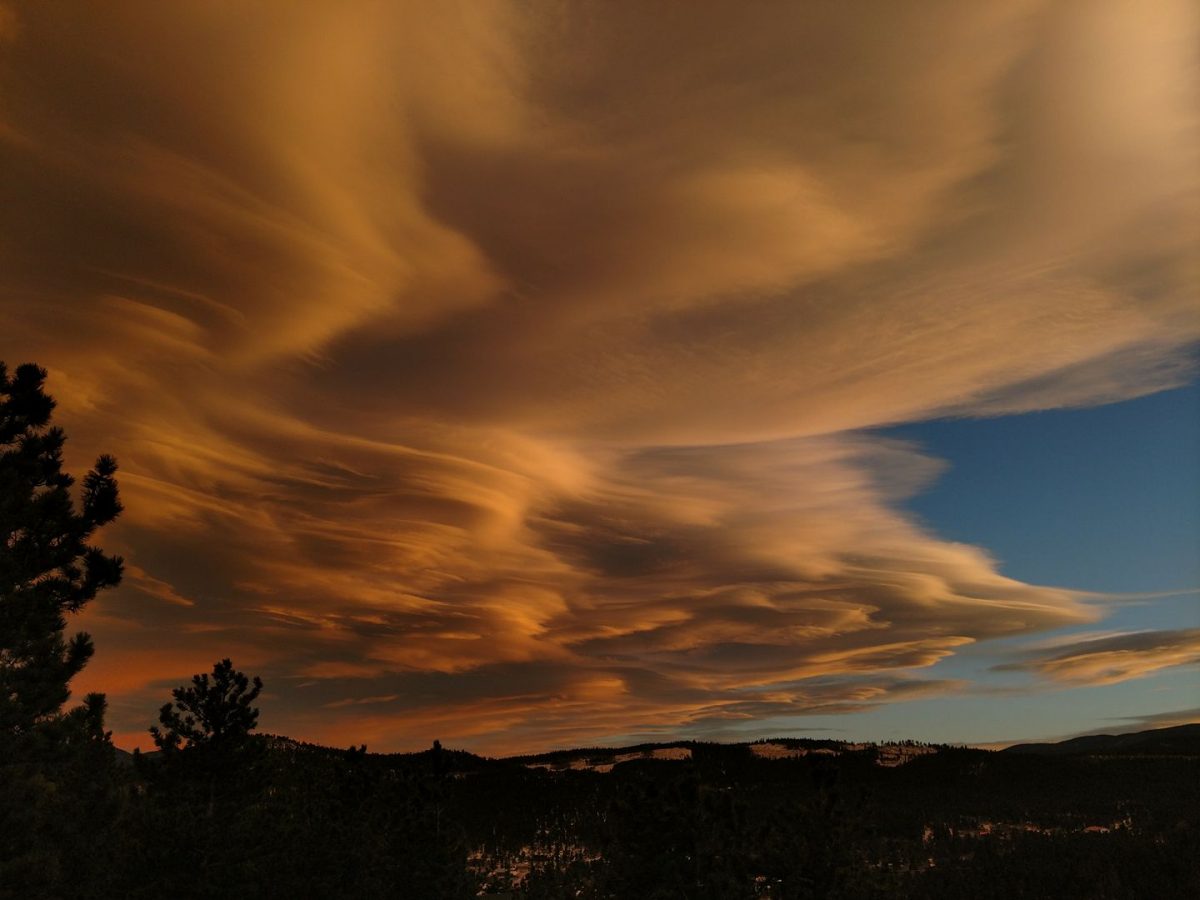

 Destination: Davis, CA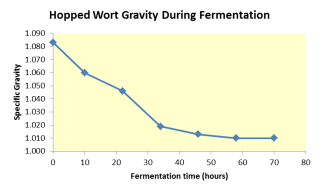

 Destination: Half Moon Bay State Beach



 Destination: New Brighton Beach State Park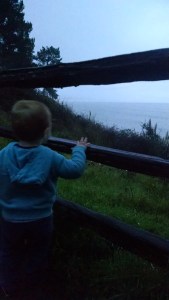



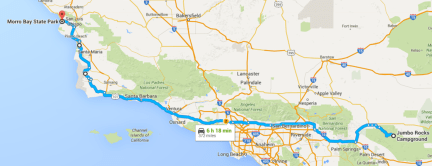 Destination: Morro Bay State Park
 Destination: Jumbo Rocks Campground, Joshua Tree National Park


 Wandervogel with the McElvains