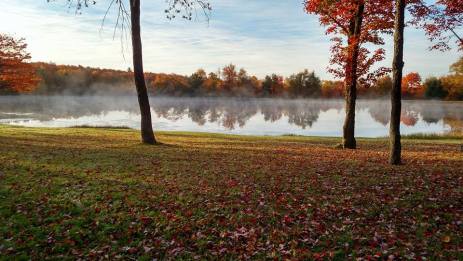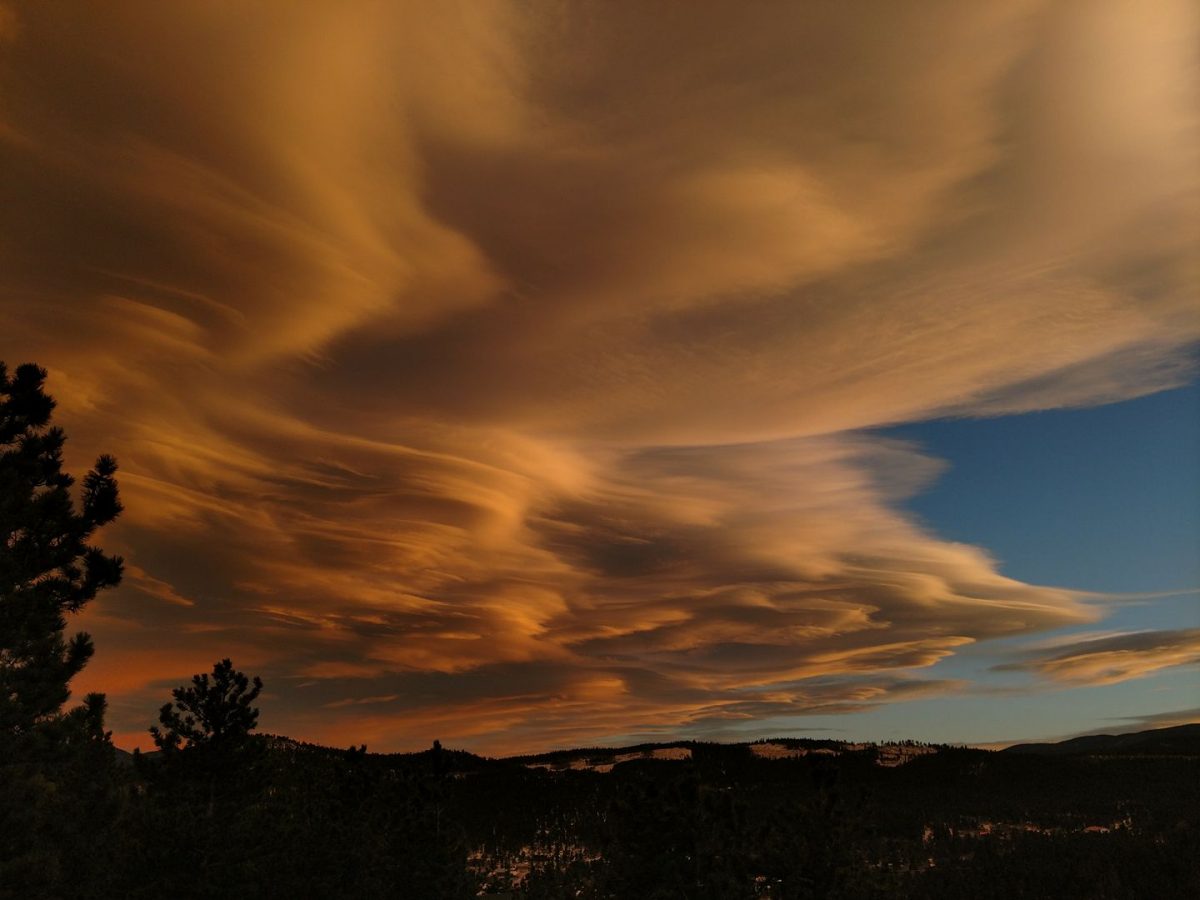
Acadia National Park

Acadia_RouteWe decided to squeeze a trip to Acadia National Park before we left the East Coast and moved west. As any good trip planners would, we visited with good friends who live in New England. It was also a fantastic way to burn up the remainder of Jess’ vacation time before she quit.

We were pulled over by police two times on the trip up to Acadia. Ticket free both times – out of state plates and Alex’s red wagon made for a sympathetic combination. The first was entering the GW, where contrary to what the Canadian border crossing agent told us, we are required to adhere to all truck restrictions. Thus we were not allowed on the lower level of the GW bridge. Apparently others have made this error before and there was a special ramp for us to  us to get to the upper level. The second was driving through Connecticut – we were not allowed on parkways due to size restrictions. The signage informing us of this restriction was not observed. We had to exit the parkway three miles short of our target destination (the interstate) and got to explore small town Connecticut as we worked an alternate route to the interstate.

We arrived in Acton, Massachusetts and spent a couple nights with Jess’ good friend from high school. As always, we added class to the neighborhood with our RV parked near her house. We also met up with some of the New England motorcycle group. After good times catching up and exploring Acton, we pushed on to Acadia National Park.

We camped a Blackwoods Campground, which was heavily wooded. This was a problem for the time of year with limited daylight hours combined with the fact that it was overcast and raining the majority of the time we were there. We had to be very conservative with our batteries since our main way of recharging them was not functioning due to the lack of sun. We could have run the generator, but that gulps propane and we had a limited supply.  An important note – when traveling to an area at the end of the season make sure your key amenities are full. We could not find an open propane station and needed to have enough for the furnace. We did not do our pre-trip preparation well at all. We could not recharge the coach batteries while driving because the solenoid was disconnected (did not discover that until after the trip).
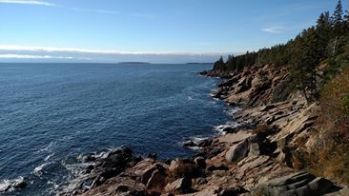
Picture taken when we briefly had sunshine.

Despite the rainy weather, we were able to get a few hikes in. We were very please to discover Acadia is dog-friendly and allows dogs on most trails. Penny, Chewie, and Buster enjoyed the opportunity to hike with us.

On the way back to Delaware, our overnight stop was at the house of friend’s from Dave’s motorcycle group. It was great catching up and great to be able to enjoy a real shower. We pushed on home the next day, and 15 miles shy of our goal, the great transmission failure occurred. Such things happen, we managed to get home in a friend’s truck.

Western Trip: Picture Gallery

A pictorial diary of our trip.

Gallery_01
Selfie just before we left our driveway.
Great River Bluffs State Park, MN
Chewie at Great River Bluffs.
Penny at Great River Bluffs.
Gallery_05
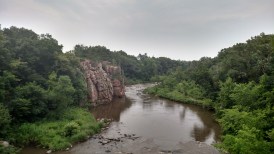
Palisades State Park, SD
Badlands National Park, SD
Prairie dog in Custer State Park, SD
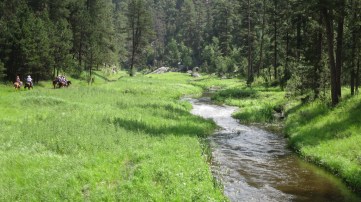
Custer State Park, SD
A trail ride in Custer State Park, SD
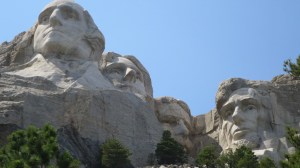
Mount Rushmore National Monument, SD
Natural Arch
""
Yellowstone, WY
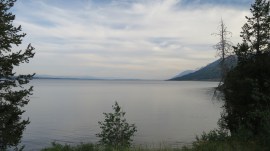
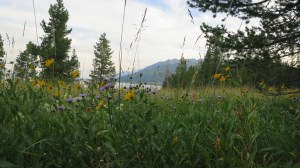
Jackson Lake, WY
Jackson Lake, WY
Jackson Lake, WY
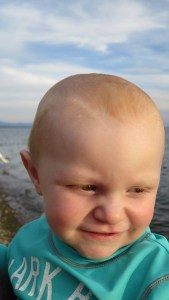
Alex at Jackson Lake, WY
""
Signal Mountain, WY
""
Abby at Signal Mountain, WY


""
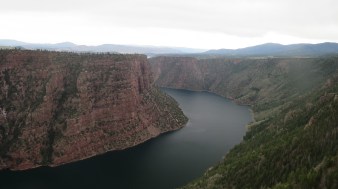
Flaming Gorge, UT
""
Flaming Gorge, UT
""
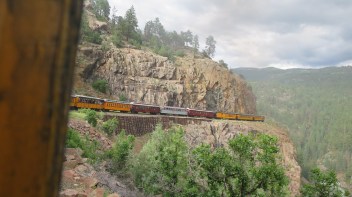
Durango Silverton RR, CO
""
Rocky Mountain National Park, CO
""
Elk in Rocky Mountain National Park, CO
""
Elk in Rocky Mountain National Park, CO
""
Penny enjoying snow in July, RMNP
""
Rocky Mountain National Park, CO

2016 Colorado Move: Great Basin National Park

Our Colorado move has been rather light on state park/national park/national forest campgrounds. We quickly discovered that the holiday weekend results in spike in usage and you have to be in extremely early to get a walk-up spot, and there may not be one since most spots are booked for the entire weekend. 75% our nights on this trip were spent in commercial campgrounds. This was not bad, just different. And truth be told, not entirely unwelcome. We had full hook-ups and were able to run the A/C, which made sleeping bearable with days in the mid-nineties and above.

GreatBasin_01
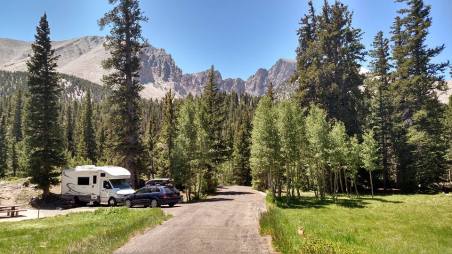
View from campsite 26 at Wheeler Peak Campground.

History:

Great Basin National Park was the jewel of our trip. Found on multiple hidden gem lists, the rangers said that the secret is getting out. This national park is just a representative piece of the Great Basin, which covers the majority of Nevada, half of Utah, and parts of eastern California, and south eastern Oregon. The region was named the Great Basin because it has no hydro-graphic connection to the ocean. Elevation greatly influences the flora, as temperature decreases and precipitation increases. These conditions result in forests composed primarily of piñon and juniper varietals with stands of limber pine, Great Basin bristlecone pine, cottonwoods, and quaking aspen interspersed. Similar to Chisos Basin in Big Bend National Park, fauna are rare species isolated after the last ice age. Great Basin is also a gold-tier international dark sky park.

GreatBasin_09
Night sky in Great Basin National Park.

The Great Basin region was inhabited by the Shoshone, Ute, Mono, and Northern Paiute tribes. Europeans first explored the region during the Spanish colonization during the 18th century.

Activities: Lehman Cave tours, hiking, caving, star gazing

Lehman Caves is part of Great Basin National Park and can be seen on a guided tour only. We went on the 60 minute Lodge Room Tour (allowed children under 5). While not as majestic as Carlsbad Caverns, it is an extremely intimate and educational tour. This cave has features actively forming, so one must be extremely cautious and not touch any of the formations. Also, they are very concerned with protecting their bats from White Nose Syndrome, so be aware that items worn in other caves that are unlikely to be washed, need to be sanitized. Review all the tour guidelines in advance to ensure that you don’t bring any contraband material with you.

GreatBasin_03
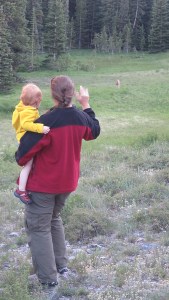
Alex and Jess waving bye-bye to the deer.
Dave and Alex watching a deer.

Our campsite (number 26) at Wheeler Peak Campground was idyllic. Over a rise behind our campsite was a creek with a meadow nearby. Next to our campsite was another alpine meadow. We observed a deer grabbing its evening meal in the meadow by the creek. There were several trail heads available at the Wheeler Creek Campground COMove_07– Lehman Creek, Bristlecone, Glacier, Mountain View Nature (accessible), Alpine Lakes Loop trails. Other hikes are accessible at different points in the park. We were hiking the Bristlecone trail when Jess fell and lacerated her knee. This resulted in us breaking camp and driving to Delta, UT (100 miles!) to the nearest hospital with decent service. For more serious injuries, it is a Medivac flight to Salt Lake City ($40,000), so be aware that this is an isolated area. We did not finish our hike, but for more detailed information regarding the Bristlecone pines, check out this article and video from Atlas Obscura. And, the best part of all, there were rocks.

Alex found a rock.
Alex found a rock.

Overall: We really enjoyed this park. The scenery is picturesque and while it is becoming more popular, the usage is light. We look forward to going back and making Jess wear knee pads during hikes.

2016 Colorado Move: Summary

We have arrived in Loveland, CO and have internet! This is no small feat considering we are dealing with Xfinity, the re-branded Comcast. Note to all businesses, changing your name will not wash away the stink of abysmal service. You eventually will have to come up with a new name because you have not solved the underlying reasons for customer dissatisfaction. Any hoo . . .

Our move to Colorado from California did not go as smoothly as we hoped. Moving on the Fourth of July weekend and having to go through a major tourist destination does not result in good time on the road. We spent more time in commercial RV parks than typical for us, but options were limited in some of the areas we were traveling.

Route from Davis, CA to Loveland, CO.

The trip covered 1,191 miles and took us over the Sierras, across the loneliest road (US-50 in Nevada), and through southern Wyoming. Abby’s mileage pulling the trailer ranged from 13.5 over the Sierras to a whopping 18 across Wyoming (tail wind aided). Dave drove Abby while Jess followed with Alex in car.

We chose to come across I-80 because the climbs were less severe than I-70 through Colorado. We did not count on the 35 mph tail wind in Wyoming which had an extremely positive effect on Abby’s mileage. Coming through Lake Tahoe on US-50 was a critical error and resulted in frustrating traffic that added 90 minutes to our trip.

Campgrounds:

  1. SacWest RV Park West Sacramento, CA: 2 night stay. Clean, trash pick up at site. Fantastic playground for Alex, pool, and a fenced in, off-leash area for dogs with agility obstacles. Full hook-ups. Restrooms closest to the office were the cleanest. The other men’s restroom, to quote Dave, ‘Looked like something completely unholy happened in it’. One stall was completely clogged and the other had poop smeared through out the stall.
  2. Fallon RV Park  Fallon, NV: 1 night stay. Clean, grass at each site, long sites that fit the 40 foot Abby/trailer combo and station wagon. Full hook-ups. Restrooms are older, but are clean. Fuel and store for supplies.
  3. Whispering Elms Motel and RV Park Baker, NV: 1 night stay outside of Great Basin National Park (will write a separate post). Full hook-ups, sites are smaller so it feels rather crowded when full. Owners are nice and found us a spot on the Fourth of July and let us stow our cargo trailer for a couple nights. Bathrooms are older, but function well and are clean. Bar is open from 4 to  8 pm and the beer selection is more diverse than Bud!

    View from behind the
    View looking way from Whispering Elms RV Park.
  4. Wheeler Peak Campground, Great Basin National Park: 1 night stay, campground elevation is approximately 10,000 feet. 8% grade for 12 miles to campground with tight turns, we left the trailer at Whispering Elms as not to tax Abby. Absolutely beautiful. For smaller rigs, well worth the journey. Check out site 25 or 26 (meadow next to site). Sites can be rather uneven, so bring leveling blocks. No hookups.

    Abby at campsite 26 in Wheeler Peak Campground
    Abby at campsite 26 in Wheeler Peak Campground
  5. Antelope Valley RV Park Delta, UT: 1 night stay, full hookups. Large levels spots with a grass next to each site and a large dirt/gravel area for dogs to be walked on leash. Very nice owners.
  6. Fort Bridger RV Park Fort Bridger, WY: 1 night stay, full hookups. Large level sites with separate parking area for tow vehicles at each site. Lots of grass and dog friendly. Owner is a veteran and is very nice.
  7. Yellow Pine Campground, Medicine Bow National Forest Laramie, WY: 1 night stay, no hook ups. Site size and levelness varies, we camped in site 12 which fit Abby, trailer and station wagon. Some sites are pull through. Surprisingly, copious amounts of mosquitoes.

Emergency Rooms:

  1. Banner Churchill Community Hospital: We stopped in Carson City, NV for lunch and discovered Alex had 102F fever; Alex received a dose of children’s ibuprofen. When we stopped for the night in Fallon and checked his temperature again, it had risen to 104F to 105F (temporal reading). We were nervous since we were going to head into an isolated area, the fever didn’t respond to medication, and Alex didn’t get upset when we turned off Cars. So Jess took him to the emergency room where his temperature was confirmed and he received a dose of Tylenol. His fever slowly came down and by the time we left he was cranky because Mama didn’t bring enough crackers. A toddler with enough energy to throw a tantrum is a toddler that is feeling good!
  2. Delta Community Hospital: Jess fell while hiking on the Bristle Cone Trail in Great Basin National Park. Unfortunately, her knee landed on a rock and caused a 3 cm laceration. Alex did not like the fact that his pack mule fell down. Dave took over Alex’s pack and we hiked back to camp. After consulting with the park EMT, we made the decision to break camp and drive to the nearest decent medical facility in Delta, UT (100 miles away!). We declined the $40,000 helicopter medivac option, it seemed a bit excessive for a laceration. Jess’ knee took 6 staples to close and the ER doctor removed a lot of debris. The experience got us to thinking that a wilderness first aid course might be extremely beneficial.

June 20, 2016 – Crescent City, Mill Creek

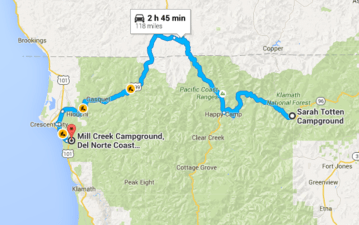
CARoute04Route: CA-96W, Indian Creek Road, US-199S
We got off to a relatively early start because the day’s activities included grocery shopping and laundry! We were westward bound on CA-96W until Happy Camp. We stopped at the Frontier Saloon and Cafe for second breakfast; Dave finally staged his uprising against granola and yogurt and insisted we stop. Portions were generous, food was good. Bacon was amazing – thick cut, not overly salted. Stop in if you are in town.

Our route took us through a remote area; the steep mountain slopes are not conducive to building. The road was twisty and when we crossed into Oregon, Abby earned another state badge. We debated on detouring to the Oregon Caves National Monument and Preserve, but it was 45 minutes out of our way and we needed clean undies. We turned south to Crescent City. We arrived and wanted to stop and Port O’Pints, but they didn’t open until 2. And there was no food as far as we could tell. Pre-made salad from Safeway for the lunch win!

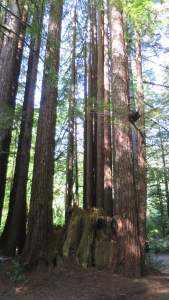
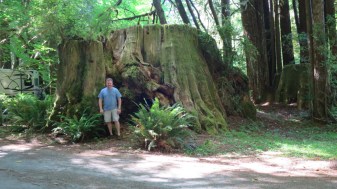
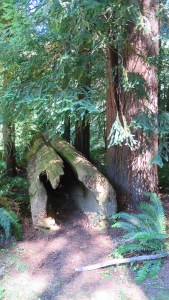
Dave standing by the stump of a redwood.

History: Redwood logging began in 1851, as the gold rush waned. Technological advances made it easier and faster to harvest the large trees. In 1920, key groves were preserved by the State of California. In 1968, Congress created Redwood National Park, protecting the world’s tallest trees and Redwood Creek’s salmon fishery.

Redwood log next to campsite 40.

Coast redwoods have been recorded at 370 feet, almost 70 feet taller than the giant sequoia. There are no known killing diseases and are resistant to insects, believed to be the result of high tannin concentrations, which also provides the red hue to the wood. Fog, created by the hot air of the central valley pulling moisture laden ocean air towards the interior of CA, is key to the survival of the coastal redwood.

Stand of young redwoods.

Redwood National and State Parks are a cooperative management effort between the National Park Service and the California Department of Parks and Recreation. Redwood National Park, Jedediah Smith Redwoods State Park, Del Norte Coast Redwoods State Park, and Prairie Creek Redwoods State Park are part of the cooperative effort and form a World Heritage Site and International Biosphere Reserve.

Campground: We stayed at Mill Creek campground in Del Norte Coast Redwoods State Park. We were lucky to get a walk-up site, number 41. Sites 40 through 42 are spaced the closest and receive the most sunlight. The sites are level and have easy access to Mill Creek. Sites 39 and 55 are prime sites, spacious and well separated from neighboring campsites. Overall, most sites in the camp well spaced. There are some tent only sites that are extremely secluded – you hike to the tent platform through a tunnel in the foliage.

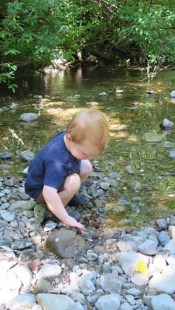
Alex enjoying the rocks in Mill Creek.

Activities: Fishing in the park tributaries of the Smith River for cutthroat trout and hatchery steelhead is permitted. Mill Creek is closed to fishing part of the year. A license is required.

Alex enjoying the hike along Trestle Trail on his pack mule.

There are a variety of trails for hiking in the park. The Trestle Trail Loop circumvents sites 1 – 74. Off of this trail, one can access the Adler Basin, Saddler Skyline, and Hobbs Wall (via Saddler Skyline) trails. The California Coastal Trail, which is 1200 miles long, runs through the park. Also in the park is the Damnation Trail, which was used by the Tolowa Indians to reach the ocean to gather shellfish and seaweed. This trail drops 1,000 feet over two miles through old-growth redwoods and Sitka spruce. We thought about attempting this hike, but wisely did the math in advance. The average grade on the trail is 10%. We opted for the Trestle Loop Trail instead. This trail was a combination of a relatively flat and wide path (good for Alex to walk a bit) and some narrow, steep hillside hiking (good time to contain Alex in the pack).

Overall: This was a fantastic campground and would be a fantastic place to set up home base for a couple of weeks and explore the coast. There are endless day trip possibilities. Also, the proximity to Crescent City means it is easy to restock food and clean clothes.

Banana slug
Banana slug

June 17, 2016 – Lassen Volcanic National Park

CARoute02
The route traveled to Lassen Volcanic National Park.

Route: CA-89N

As we drove, Dave commented that the landscape was feeling less like California (grey, rocky mountains) and more like the Pacific Northwest (thick pine forests, lots of logging trucks). A quick consult with the map showed that Lassen National Forest straddles the Sierra and Cascade ranges, which are quintessential California and Pacific Northwest, respectively. The drive was picturesque, with twisty roads following creeks and cutting along the mountain. All the plants were freshly green, having recently shaken off winter’s chill.

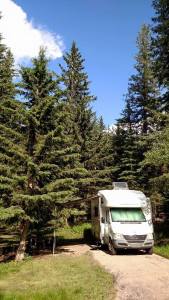
Abby parked at the Lassen Peak trail head.

We were expecting to see much more snow during the drive, since CA-89, the Lassen Volcanic National Park through road, had only recently been cleared of snow and opened. However, we only saw occasional patches of snow. Then we started to climb as we entered the park and the odds were in our favor (and Penny’s) significant snow. It did not take long after entering the park before there was snow, and significant quantities.  The drive was a bit harrowing with the thick fog, but the positive side was we could not see the steep drop offs along the road. If you feel that the government is over protecting you, drive the road through Lassen. There isn’t much government protection standing between you and the drop off.

2016_Lassen04
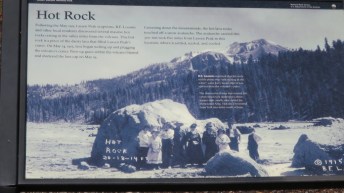
300 ton rock landed 3 miles from Mount Lassen after the 1915 eruption.

History: Designated a National park on August 9, 1916, in part due to the continuing volcanic activity after the 1915 eruption. President Theodore Roosevelt initially protected the area with the formation of Cinder Cone National Monument and Lassen Peak National Monument in 1905.

Native Americans inhabited the area and believed that Lassen would one day blow itself apart. Lassen Peak was used as a landmark for immigrants on their way to the fertile Sacramento Valley.

Campground: We stayed at the Manzanita Lake campground, in the Northwest corner of the park; this was the only campground open. The other campgrounds were still being cleared of winter related damage. This campground has four loops. Sites can be reserved on loops A and C, loops B and D are first come, first served. Loop D is for tent camping only. There are multiple trail heads in or close to the campground (Manzanita Creek, Crags Lake, Manzanita Lake, Lily Pond Nature Trail, Reflection Lake, Nobles Emigrant). We were in site C44, which was spacious with and felt secluded. Other prime sites in the C loop include C22, C24, C25, and C26. There is no cell service.

2016_Lassen06
Alex sleeping during the hike to Crags Lake.
Heading over the crest to Crags Lake.
View of Chaos Crags from Crags Lake.

Activities: Kayaks can be rented from the camp store for use on Manzanita Lake. We decided to hike the Chaos Crags trail. The sign at the trail head, which was a solid 0.5 miles away from our campsite, indicated a 2 mile walk with approximately 825 feet of elevation increase. Simple math, done at leisure after the hike, determined that the average grade of the trail was 8%. Math, it rocks. There were sections that were rather flat, and sections that were very steep. The 4 mile round trip took us about 3.5 hours. This time includes the 30 minutes we spent at Crags Lake watching Alex throw rocks into the water and laugh at the ‘bloops’. The hike offered amazing views and took us throw an area that had been affected by fire. The hike was sunnier than expected due to reduced tree cover. And there is cell service! We definitely were sore after this hike.

2016_Lassen09
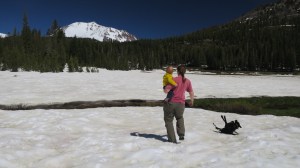
Snow field along a creek. Penny is clearly happy.

Skiing and snowboarding are also options for activities! In June! Our first night camping, it rained at the campground, but higher elevations received approximately six inches of snow. The through road was closed again to allow for plowing.

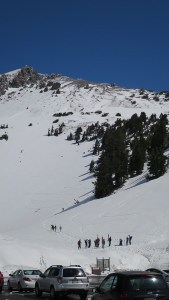
Ski and snowboarders at the Lassen trail head.

The Kohm Yah-mah-nee Visitor Center has great interactive displays. There is a description of the different types of volcanoes (cinder cone, composite, plug flow) and an interactive map that will light up the type examples with in the park with the push of a button (Alex loved this). Another interactive exhibit had a tunnel that was perfect for a toddler to run through; a light lit up as Alex ran through the tunnel. This was also a great source of joy. Two gift shops, an area with children’s toys, a cafe, and theater round out the offerings at the visitor center.

Overall: This is a beautiful park with hiking options that we did not even scratch the surface of in regards to activities and hikes. Note that if you are interested in the Lave Tube caves, which are located in Lassen National Forest, about 45 minutes north on CA-44/CA-89. As our usual, we wish we were spending more time here.

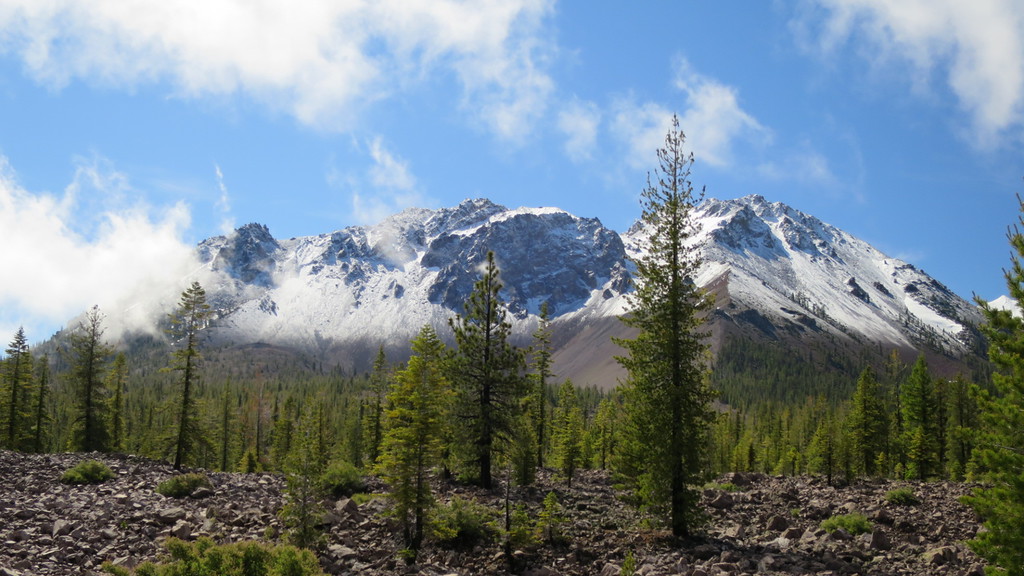
Mount Lassen with a fresh coat of snow.

Western Trip: Campground Summary

Favorites

  1. Campsite at Sylvan Lake
    Campsite at Sylvan Lake

    Sylvan Lake Campground at Custer State Park, SD: Sites were well spaced, secluded, grounds were well taken care of. Site was level. Our campsite was tucked away among trees. The campground was not on the lake, but was a quick hike to the lake and there was access several trail heads. Scenery was gorgeous.

    Sylvan Lake
    Sylvan Lake at Custer State Park.
  2. Red Canyon Campground at Flaming Gorge National Recreation Area, UT:
    Abby in our campsite at Red Canyon.
    Abby in our campsite at Red Canyon.

    This campground has sites that are a stone’s throw away from the rim of the gorge. Visitors center is a short hike away. Some hiking trails along the gorge rim. Gorgeous scenery. Sites are well spaced and level. We wouldn’t camp here again until Alex is older and listens better. Jess would become instantaneously grey making sure Alex didn’t fall into the gorge. Or he will need one of those child leashes.

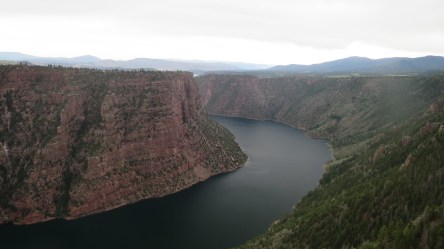
    View from the Red Canyon Campground in Flaming Gorge National Recreation Area.
    View from the Red Canyon Campground in Flaming Gorge National Recreation Area.
  3. Mueller State Park, CO: This campground had nicely spaced, wooded sites. Some sites had a view of Pike’s Peak, but these go quickly on the reservations page. Great laundry facility and playgroud for Alex. Alex’s wagon came into play as our laundry mobile when walking up the hill to the laundromat. Park is well cared for and the staff is friendly. Group sites also available.

    2015_Mueller
    View of Pike’s Peak, obscured by cloud cover.

Least Favorites

  1. Mormon Island State Recreation Area, NE: Campground is next to a lake, on an island, in the middle of the Platte River. The lake is part of Nebraska’s Chain of Lakes; these lakes are water filled excavation pits from I-80’s construction and converted to recreation areas.. We stayed here because it was easy access to I-80, had full hook-ups (needed to run the A/C due to the heat and humidity), and it was approximately the target distance we wanted to drive in a day upon leaving Colorado. The lake’s aroma left a bit to be desired. Campground served its purpose, but it was cruel switch from the Rockies.
  2. Starved Rock State Park, IL: The park website looks amazing! Don’t be fooled, the campground is definitely not amazing. If the campground is in the park, it is on the border. You do drive past the beautiful area to the campground, which is mosquito infested to the point you can’t be outside. We would have rather stayed in a commercial campground.

Biggest Pleasant Surprise

  1. View from the bluff at Great River Bluffs State Park, MN.
    View from the bluff at Great River Bluffs State Park, MN.

    Great River Bluffs State Park, MN: The geological features of this park are the result of minimal glacial drift from any of the four major glaciers. Sites were well spaced and wooded. Some are not level, so check the reservation site, it should provide information. Nice hiking trails with views of the Mississippi River Valley. And there were little chipmunks for Penny to watch from Abby’s window.

    Penny watching chipmunks at Great River Bluffs State Park, MN.
    Penny watching chipmunks at Great River Bluffs State Park, MN.

Biggest Disappointment

  1. Yellowstone, WY: It was Fourth of July weekend. There were hordes of people and we were lucky to get a spot. Campsites were crowded. People were oblivious to etiquette. The bathrooms were not clean. Dave said he would rather take one of the poop bags for the dogs out to the woods rather than use the bathroom. Jess was too scared to see the horrors of the women’s bathroom. There will be a separate Yellowstone post to discuss why this was our least favorite park of the entire trip. I’m sure Yellowstone is much nicer when it isn’t the peak travel season.

Western Trip Summary

We started our first long RV adventure on June 27, 2015. We had made the decision just three weeks prior to move to California so Jess could enroll in the UC Davis Extension Master Brewers Program; we knew that when we returned we would have to kick things into high gear to prepare the house for sale (we had our floors refinished while we were gone). Looking back, it is hard to believe we got it all done. And it is still rather surreal that a year later we are packing up our California rental to move to Colorado.

Since it has been so long since our trip, the format for posts will be different from our California move. This summary post will be followed by posts focusing on our favorite/least favorite campgrounds, side trips made along the way, and anything else that may require a stand alone post. These stand alone posts will likely be due excessive length as a result of our poor self-editing skills. Some of our notes (including total gallons of diesel and mileage) have been misplaced in a cross-country move.

2015 Summer Trip
2015 Summer Trip

The trip was approximately 5200 miles, including side trips. We used about 345 gallons of diesel, averaging right around 15 miles per gallon.

We started our trip on June 27, 2015 and were back July 16, 2015. Just shy of 3 full weeks and resulting in an average of 273 miles traveled per day.

Family selfie just before leaving the driveway.

The trip started out on a rainy, mechanical break down note with Abby’s turbo resonator failing, but after our first day hiccup, it was smooth sailing. We had a great time visiting family and friends along our route. And they were always very kind in giving us a place to park, do laundry, and shower in a full size bathroom!

The whirlwind trip took us to four national parks, a national monument, a national recreation area, two national forests, and seven state parks. We definitely erred in wedged too many sights into our trip schedule; we learned from our errors on this trip and corrected them for future trips.

Campgrounds:

  1. Great River Bluffs State Park, MN – overnight rest stop only
  2. Palisades State Park, SD – 2 night stop, rest day

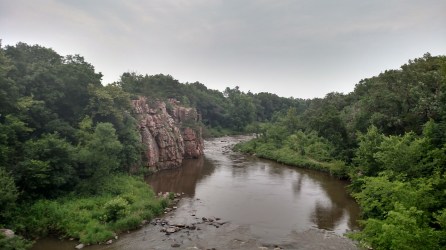
    Palisades State Park in South Dakota
    Palisades State Park in South Dakota
  3. Custer State Park, SD – 2 night stop (Grace Coolidge, Sylvan Lake)
  4. Yellowstone National Park, WY – overnight (Fishing Creek)
  5. Grand Teton National Park, WY – overnight (Lizard Creek)
  6. Bridger-Teton National Forest, WY – overnight (East Table)
  7. Flaming Gorge National Recreation Area, UT – overnight
  8. San Juan National Forest, CO – 2 night stop (Junction Creek)
  9. Mueller State Park, CO – overnight

    2015_Mueller
    View of Pike’s Peak (under cloud cover) from Mueller State Park.
  10. Rocky Mountain National Park, CO – 2 night stop (Olive Ridge – technically just outside the park)
  11. Mormon Island State Recreation Area, NE – overnight
  12. Starved Rock State Park, IL – overnight
  13. West Branch State Park, OH – overnight

    2015_WestBranch
    View for our campsite in West Branch State Park, OH. Our last night on the road.

Alex and Abby – A history

Alex and Abby met for the first time when Alex was just shy of three months old. It was not love at first sight. Alex was tired and cranky and didn’t seem to appreciate the test drive. But good parents that we are, we overrode Alex’s objections and purchased Abby.

August 2014: Alex’s first trip in Abby was an overnight shakedown run to Pequea Creek Campground in Pennsylvania. It was on this run that future thoughts for organization started to present themselves. But nothing too disastrous and we were only an hour away from home.

Ommegang
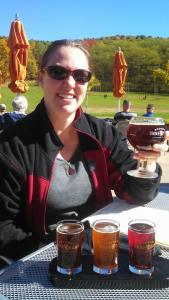
Jess enjoying a beer, back during the days Alex would sleep at a bar.

October 2014: Alex and Abby had more time to bond on their next trip to Cooperstown, NY area over Columbus Day weekend. We dragged Alex not to the Baseball Hall of Fame, but to Brewery Ommegang. That’s just how we parent. We were fortunate because Alex was still at a stage where he slept – a lot. And wasn’t super mobile so he perfectly content to hang out in his car seat at the table while we ate and chatted. We stayed at Beaver Spring Lake Campground, which had full hook ups. This was very fortuitous because the overnight lows were high 20s. No water lines froze despite our lack of an arctic package. Alex seemed to enjoy himself on this trip and it was deemed rather successful.

Alex enjoying some tummy time outside on the dinette cushions.
Alex snuggled up in his Storchenwiege carrier.

Novermber 2014: Alex took his first trip to Cape Henlopen State Park. This is a beautiful campground area, with some spots very nicely shaded. Being late in the season, the campground was sparsely populated, save some tent campers who were competing in the ‘Skate the Cape’ event weekend. Looked like a fun event; everyone that we interacted with was extremely nice. A drawback at Cape Henlope is the park staff don’t want RVs parking off of the pavement; there are only a few spots that don’t resemble parallel parking. It would be nice if one could be trusted to use their own judgement and park on the hard pack sand, but I am sure experience has taught the staff that most people overestimate their or their vehicle’s abilities. Review the park map and choose wisely. While there are water hook ups, some of the spigots are at least 50′ away from the spot they are assigned to service; pack two sanitary water hoses just in case.

Alex_Hammock
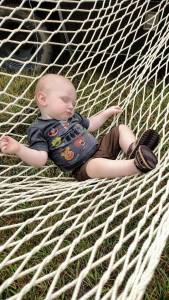
Alex taking a nap in the RV campground at Firefly. Resting up for a big day of concerts and people watching.

June 2015: 2015 started out relatively quiet with a trip to Cape Henlopen and the Outer Banks as a quick weekend shake down runs ahead of a busy summer travel schedule. After that the travel season became very hectic. First, was our trip to the Firefly Music Festival in Dover, DE the weekend of June 18 – 21. We had been debating on going, but when they announced Paul McCartney was headlining, we decided to go for it. Alex seemed to have a really fun time; we introduced him to the WeeRide which he loved. He had a strong dislike for his bike helmet initially, but once he made the connection between the helmet and going for a bike ride, all was okay. Alex enjoyed snoozing in the hammock and got to “see” Paul McCartney in concert. Never fear, he had ear protection on whenever we were on the concert grounds.

IMG_20150705_195353640
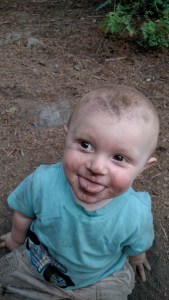
Alex enjoying dirt along the snake river in Wyoming.

June/July 2015Less than a week after we returned from Firefly, Abby spirited all of us (including the dogs) off on a 3 week western adventure. This trip started with failed turbo resonator, but there were no more mechanical failures on the trip. Alex had a great time playing in dirt and “driving” the RV.

Alex enjoying Mama's biscuits and gravy so much he is using two spoon.
Alex enjoying Mama’s biscuits and gravy so much he is using two spoon.

September 2015: Abby took Alex on his first trip out of the country! We drove up to Saint-Alphonse-Rodriguez, in Quebec. It was a fun trip. We were only a little bit nervous at the border crossings because Alex’s favorite phrase at this time was ‘uh oh’. We didn’t think it would be wise to answer the border guard’s question with ‘uh oh’.


October 2015:
Just when Alex and Abby were going to have to say good-bye to each other for a few months, we decided to throw two October trips into the mix. The first was over Columbus Day weekend to the Mansfield area of Pennsylvania. Dave rode his motorcycle up and Jess drove the RV. Alex and the dogs got a bonus visit to the farm to visit Mimi and Grandpa. We stayed at Tanglewood Campground which was very family friendly. Costume parade for the kids and what we heard was a very well done haunted trail ride.

Tanglewood
Morning at Tanglewood Campground.


We decided to take a trip to visit all the remaining Northeast states before we moved west. So Alex and Abby hit the road together again to Acadia National Park in Maine. This was the most dog-friendly park we have visited where dogs are allowed on most trails. Our creature triple feature had a great time. Abby was challenged with no hook-ups and short, cloudy days prevented the solar panels from recharging the batteries. We needed to run the generator to charge the batteries. Except we overestimated our propane levels and couldn’t find anywhere to fill up since it was the end of the season and most places had closed down. To add to the challenge, the coach batteries weren’t recharging from the engine. Thus, a very delicate game of cat and mouse was played between propane and battery levels. This trip happened to be the trip that the transmission failed; while Abby didn’t see Alex home to the door, she did arrange a ride for him in a big rig.

Abby being towed from the EZ-Pass administration building parking lot.

December 2015/January 2016: And we can’t forget the cross-country move! Alex and Abby had lots of quality time together as we meandered across the South and up the Pacific Coast Highway to Davis, CA. Check out our detailed blog posts chronicling this journey. There are many more than the one linked, check out the archives or the category ‘Travel Diary: 2016 DE to CA’.

One of our greatest concerns with all the traveling we do is making sure Alex is having fun. We can’t know for sure, but he always gets excited when he sees Abby and wants to climb aboard. All said and done, we let this picture speak volumes.

Alex the traveling man as Abby moves him down the road.

Day 20: 01/15/2016 – Joshua Tree National Park

Day20RouteDestination: Jumbo Rocks Campground, Joshua Tree National Park
Route: I-10W, National Park Roads

Mileage: 133 miles                                New state: California

Dutch and his pup.
Dutch and his pup.

It is time to hit the road again! But before we go we spend the morning hanging out with Marilee and the Toyota crew. They are great people and it is educational to check out their rigs to see the modifications they made and pick up tips on living in a condensed space. One such person is Dutch. A Texan who met his wife in Colorado (where she is visiting family at the time of our stop in Quartzsite), they sold their house and became rubber tramps a couple of years ago. Great person to get ideas from and learn about full-time RV living. We finish up our time in Quartzsite chatting with Marilee; we need to leave in relatively good order so we can grab a site in the first come first serve Jumbo Rocks campground.

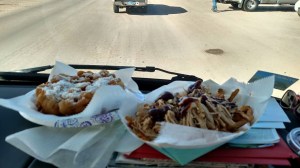
Lunch of champions: pulled pork fries and funnel cake.

As we are leaving, we decide to stop at our favorite food truck and get lunch for the road. Abandoning the poutine, we opt for the pulled pork fries and the funnel cake. Lunch of champions people. Alex got fries and pulled pork, but fruit is substituted for the funnel cake. Alex falls asleep with bits of pork on his shirt, which Penny so kindly cleans (very gently, can’t wake the toddler) off of him.

SignLA
Follow the green signs!
SignCALine
Hello California! So glad we made it.

As we approach the highway, it is straight ahead, at full speed! California, here we come! Approximately 30 minutes on the road, we see the sign we have spent 20 days driving towards – the California state line! We still have a hurdle to cross before we can be officially admitted into the state – the agricultural inspection station. As we slow down to stop, the agent just waves us through and seems annoyed that we slowed down. Onward!

We reach exit 168 that will take us into Jumbo Rocks. As we are approaching the park entrance, who do we see boon-docking on BLM land? The Wynns from Gone with the Wynns! The solar array on their motorhome and teal logo on their smart car are pretty solid identifiers. Full-timers in a class A, we have picked up helpful tips and hints from their website. Especially in the regard to solar power and coach batteries. A quick stop to say hi and thanks for the inspiration, and we are on the road enter Joshua Tree National Park.

Joshua Tree is located where the Mojave (western half of park, 3000 feet plus above sea level) and Colorado (eastern half of park, below 3000 feet above sea level) deserts converge. Mojave flora includes pinyon pines, junipers, scrub oaks, Mojave yuccas, Mojave prickly pear cacti, Parry’s nolina, and, of course, the Joshua tree (a species of yucca). Mojave fauna includes antelope ground squirrel, yucca night lizard, black-tailed jackrabbit, common raven, American kestrel, loggerhead shrike, red-tailed hawk, Scott’s oriole, western screech owl, and the southwester speckled rattlesnake. The Colorado desert’s flora includes palo verde, ocotillo, smoke tree, brittlebush, chuparosa, sand verbena, pencil cholla, and dune primrose. The kit fox, kangaroo rat, zebratail lizard, LeConte’s thrasher, tiny checkerspot butterfly, and the western diamondback rattle snake are the fauna that inhabit the Colorado desert.

The piles of boulders are impressive to see.  The rocks are granite, formed by magma intruding on the Pinto genesis formation underground. As the granite cooled, horizontal and vertical cracks were formed. As the granite was uplifted, ground water caused chemical weathering, which widened the cracks and rounded the edges. The soil eroded, resulting in the heaps of monzogranite seen today.

We arrive at Jumbo Rocks, and there aren’t many spots left. Fortunately, there are a couple of other campground options that we drove by that seemed sparsely populated with campers. Luck was on our side, and we found a spot to wedge ourselves into. Not nearly as bad as our first night at Big Bend, but not ideal. After we settle in, we take a short hike to Skull Rock. Nothing too strenuous and it gets us out of the RV after the day’s drive. We don’t want to be gone too long since there is a special program at the amphitheater tonight.

While we are eating dinner, there is a knock on the door. It was Ranger Doug informing us about the program at the amphitheater. We had planned on going, hence the early dinner time, and finish up so we can be on time. The desert night is a bit chilly, so we bundle up and walk to the amphitheater. Ranger Doug is traveling across the country informing people about the posters the WPA (remember those school lessons about the New Deal?) printed for the National Parks between 1938 and 1941. Many of the original posters have been lost or forgotten in archives. Multiple versions for a single park have also been discovered. It is a fascinating talk at the time and effort into the reproduction process is staggering. If the opportunity presents itself to hear Ranger Doug speak, one should seize it; he is enthusiastic in his mission and knowledgeable. As always, it is early to bed, for what we hope is an early to rise.