Pacific Northwest: Yellowstone and Grand Teton

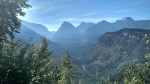
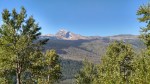
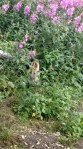
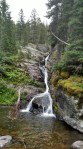
We last visited Yellowstone in July of 2015, and were frustrated by the shear number of people also there. We thought that coming later in the season would improve our experience, as less people would be there. While the crowds were reduced at the end of September compared to July, there were many more people than we expected.

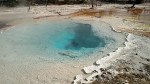
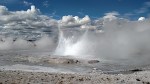
Also unexpected was the fog, which made it hard to see some of the features, especially later in the day as the air was cooling (at Grand Prismatic Spring the fog was very thick and swirling with the wind). The fog also made it challenging to see wildlife and pedestrians along the side of the road. We definitely slowed down leaving the park due to poor visibility; as our elevation decreased, the fog began to dissipate.

We were did walk the Fountain Paint Pots and Grand Prismatic Spring Nature trails. Both were board walks that went past multiple thermal features. These walks were smooth and easy for Alex to navigate, but people added a challenge. There was not a railing at all points to ensure a little boy stayed the course. It required some herding of Alex to make sure he didn’t run into people or fall off the walkway. There were stairs to Grand Prismatic Spring; Fountain Paint Pots did not have stairs, but there was one steeper grade.

Pay attention to park bulletins if you are camping late in the season. We wanted to camp at the Tower Falls campground, but it had closed three days prior. Additionally, there was road construction just south of the North entrance, requiring a significant re-route through the park. After reviewing the campgrounds that were still open (Mammoth Hot Springs, Madison, Slough Creek, and Lewis Lake) , we re-routed to the West entrance because Lewis Lake still had availability and we did not have to take the detour. We drove along the Gallatin River on US-191S; the fall colors were absolutely beautiful along this route.

We exited Yellowstone via the South entrance and drove through John D. Rockefeller Jr. Memorial Parkway and Grand Teton National Park to Coulter Bay Village. This route allowed us an up close view of the damage caused by the fire earlier in the park from earlier this summer. The fire damage, along with the low level of Jackson Lake, emphasized the drought that western states have been suffering.

When is the best time to visit Yellowstone and Grand Teton? We wish we knew. Rangers said that social media (people being warned about the crowded conditions during the summer) has extended the peak season closer and closer to season’s end.

Gallery:

Click on a picture to launch the gallery in a new window


Pacific Northwest: Big Hole National Battlefield

Big Hole National Battlefield

The battlefield is located along Highway 34, west of Wisdom, MT, on the eastern edge of the Bitterroot National Forest.

History

The Nez Perce aboriginal lands originally consisted of 13 million acres in Idaho, Montana, Oregon, Washington, and Canada. A US government treaty in 1855 reduced this land by half, with the promise of the right to hunt, fish and gather on the land given up for white settlement. This treaty was adhered to until 1860 when gold was discovered on Nez Perce land; a new treaty in 1863 further reduced their lands by 90%. Five bands of Nez Perce and their allies the Palouse and Cayuse refused this second treaty, and became known as the non-treaty Nez Perce.

In 1877 the US government gave the non-treaty Nez Perce 30 days to move onto the reservation. Many of their belongings, including livestock, were lost on the journey. Fighting broke out before the reservation was reached and led to a four-month flight over 1,000 miles with numerous battles.

In early August, over 800 Nez Perce, mainly family groups, and 2000 horse were passing through the Bitterroot Valley in Montana on their way to buffalo country. Colonel John Gibbon and his troops were close behind, and in the early morning hours of August 9, 1877, attacked, burning tipis, killing women, children, and elders. Estimates of the Nez Perce causalities number from 60 to 90, while the military and civilian volunteers lost 31 individuals.

Impact

The descendants of Chief Young Joseph stated, upon reflection:

“Treaties divided and scattered us, both physically and spiritually. They threatened to sever our spiritual connection with the land and fostered the division of our people into Christian and non-Christian, treaty and non-treaty, and finally, tribe and non-tribe.”

Some members escaped to Canada during the battle at Bear Paw. White Bird, who led over 250 members of the Nez Perce to Canada, said,

“With women’s hearts breaking, children weeping and men silent we moved over the divide and closed our eyes upon our once happy homes. We were wanderers on the prairie . . . The white man wanted the wealth our people possessed; he got it by the destruction of our people. We who yesterday were rich are beggars today. We have no country, no people, no home.”

Others who were captured were considered prisoners of war and sent to Kansas and on to Indian Territory (Oklahoma). Here, over 200 people, many babies and children died.

It was easy to see why the Nez Perce stopped here and were hopeful that they had evaded the US Military. The valley is beautiful with the Big Hole River, trees, and plentiful grass. To read the accounts of the horror that occurred to the Nez Perce was heart-wrenching. The Nez Perce warriors were heroic in driving back the US soldiers to provide families with the opportunity to flee.

Alex is too young to remember this visit, but we feel it is important to educate Alex on all aspects of American history, as ugly and painful as they may be. We look forward having the honor of visiting this site again.

National Parks Passport Book

img_20161001_161919
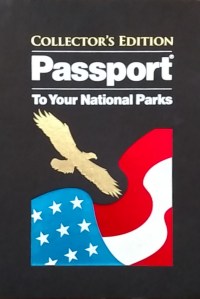
Cover of the National Parks Passport book.

Jess purchased a National Parks Passport book and may have the beginnings of a slight obsession in obtaining cancellations at a variety of parks, monuments, historic sites, and recreation areas. Since she also does a majority of the trip routing, Dave has been subjected to her various whims to obtain the next cancellation; he is starting to question the trip routes.

While the route planning has become slightly circuitous, we have been seeing national monuments, recreation areas, historic sites and parks that we wouldn’t have otherwise considered. These places, such as Little Bighorn Battlefield National Monument and the Grant-Kohrs Ranch Historic Site, have increased our understanding of our country’s history. We have also enjoyed some beautiful scenery as we have traveled a bit off the beaten path.

Since we purchased the book after the great westward move, cancellations from that trip and all previous trips are absent. This just means we will have to revisit some amazing parks, like Big Bend National Park.

The Collector’s Edition is nice, but for the rigors of travel, the Explorer version would have been the more robust choice. The Explorer is a binder style, so additional pages can be added; the Collector’s Edition cannot be added to.

Cancellations and stamps for the Western region.

Northern Rockies: Oh Canada!

We really enjoyed our time in Canada. In Banff National Park, we visited the Upper Hot Springs and hiked the Marsh Loop and continued onto the Sundance Trail. Parks Canada is kind enough to mark there trails as easy (green), intermediate (blue), and advanced (black). However, in some of the intermediate trail descriptions, the elevation gain over the length of the trail calculates to an average 10% grade. If a 10% average grade is considered intermediate, we would hate to see the trail that is marked advanced.

Despite hiking to the Sundance Canyon trail head, we did not hike the canyon due to time constraints. Overall the Marsh Loop was flat and easy walking. Horse tours use this trail, so be prepared to step to the side to allow horses to pass and to dodge road apples as you walk. The Sundance Trail (to the Sundance Canyon trail head) was paved and started out flat. Approximately halfway down the trail, the grade increased and remained consistent for the remainder of the hike to the Canyon. Be cautious of bicyclists coming down from the Canyon.
Hot Springs

  1. Banff Upper Hot Springs: Our favorite hot springs of the trip. The scenery is fantastic and the locker rooms were very well done. There is not cold pool at this location, so that might have reduced the number of people. Come early in the day, the crowds start to pick up around 11 am. Towel rentals are reasonable, just ask for a locker rental when you are purchasing tickets and you will receive a looney for the lockers. Smallest pool we visited, so it has the potential of feeling crowded during peak hours. There is no parking next to the building, just a drop off area. Parking area was close to the Sulphur Peak gondola route; Alex was excited to watch these strange, new contraptions. The Banff Upper Hot Springs had the coldest water temperature. Children under 3 must wear a water proof swim diaper. Swim suit rentals are also available.

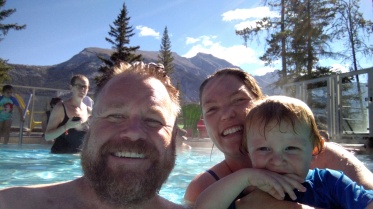
    Banff Upper Hot Springs selfie.
    Banff Upper Hot Springs selfie.
  2. Radium Hot Springs: Our second favorite hot spring of the trip. A much larger hot pool, small hot tub, and a cold pool. Heavier usage with less desirable locker room facilities. Unlike Banff Upper Hot Springs, after leaving the locker room, there was a long walk to get to either the hot or cold pool. Admission, towel, and locker fees were the very similar, if not the same, to Banff. Setting was less scenic and there is limited space to place your towel. Added bonus, you are exposed to radon gas. Children under 3 must wear a water proof swim diaper.
  3. Fairmont Hot Springs Resort: Higher admission and towel rental fees. For being a resort, the locker room was looking a bit long in the tooth. Hottest water of the three hot pools. Cold pool with diving board adjacent to hot pool. Alex, despite being unable to swim, wanted to jump off the diving board like the other boys.

Marsh Loop/Sundance Trail Gallery:

Click on a picture to enlarge/begin slide show.

Northern Rockies: Going to the Sun Road

We learned that in Glacier National Park, the ‘crown of the continent’, there is a convergence of plants and animals from diverse environments. The ecosystems of the north (Canada), Maritime (Pacific Northwest), south (Southern Rocky Mountains), and east (prairie species) are found here, the narrowest point of the Rocky Mountain Chain. Water from the park flows to the Pacific Ocean (via the Columbia River), Hudson Bay (Saskatchewan and Nelson Rivers), and the Gulf of Mexico (Missouri and Mississippi Rivers); this convergence of watersheds also promotes the migration and dispersal of plants and animals. This environment is so diverse, all native carnivores – grizzly bears, black bears, wolves, and cougars – are able to survive. The abrupt transition from mountain forest to prairie supports a variety of herbivores – elk, deer, big-horn sheep, and mountain goats – which in turn allow the carnivores to survive.

img_20160829_144459415
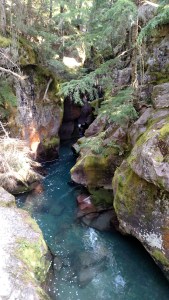
Creek along Trail of the Cedars.

Going to the Sun Road (driven in a rental car because Abby was too long and tall) provided an excellent example of the diversity that abounds in the park. Starting from the Apgar campground on the west side, we moved through areas that were reminiscent of the Pacific Northwest, which was exemplified by the Trail of the Cedars (handicap accessible board walk/paved trail). Ferns, under towering cedars, dominated the forest floor. As we climbed to Logan Pass, grass became more dominant and wildflowers (Indian Paint brush, bear grass) were in full bloom. We even saw a mountain goat. Over the pass, we pushed on to St. Mary, and the cedars were replaced by dense stands of pine trees.

In the future, when Alex is older, we will take the shuttle. Many of the lots were full (the Logan Pass visitors center was like the mall parking lot at Christmas time), so if we wanted to hike we would not have been able to due to lack of parking.

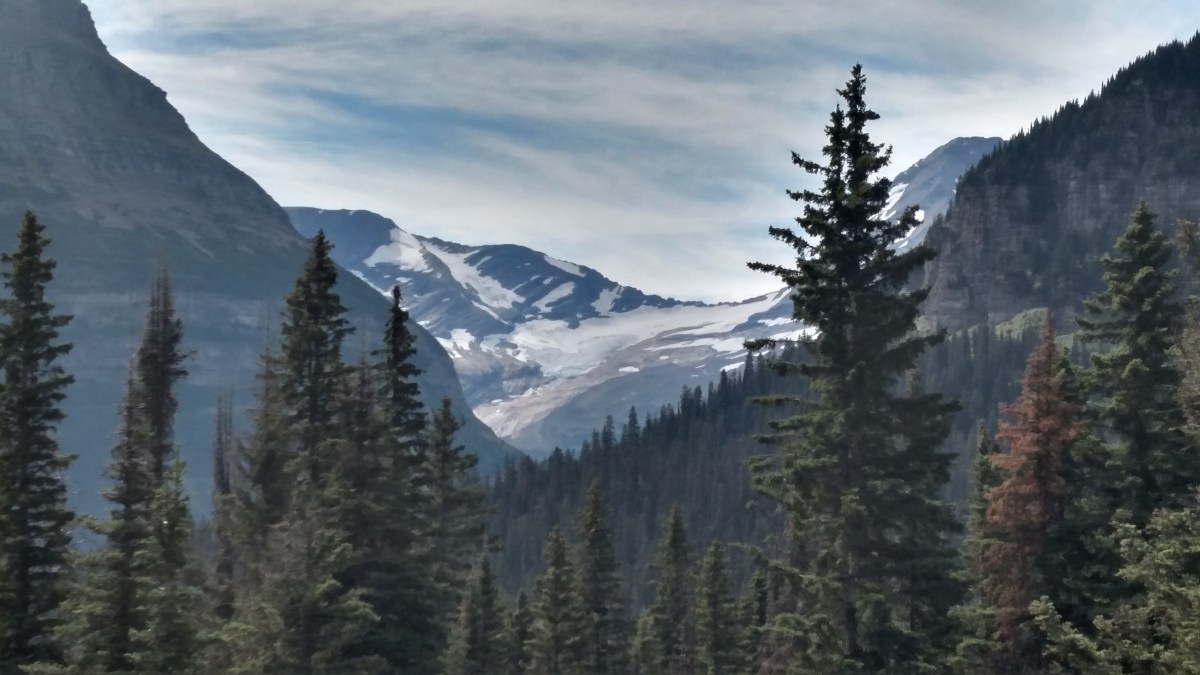
Click on the images below from our trip on Going to the Sun Road to enlarge the picture.


Northern Rockies: Grant-Kohrs Ranch National Historic Site

Grant-Kohrs Ranch National Historic Site

This historic site is located off of I-90 near Deer Lodge, Montana.

History

Johnny Grant, a Canadian, settled in the Deer Lodge Valley of Montana. This area was considered Flathead territory, but it was used as a route to hunting and trading areas by a variety of tribes. Mr. Grant’s marriages to women of several different tribes helped him settle in the valley peacefully.

Conrad Kohrs, a German immigrant, initially came to America in search of gold. He worked as a butcher’s assistant and soon owned butcher shops in many gold camps. (History has shown that very few gold miners got rich, it was the men who ran the supply shops that profited the most.) He partnered with Johnny Grant, who supplied cattle to Mr. Kohrs’ butcher shops. Conrad Kohrs later bought Johnny Grants’ ranch, the latter then returned to Canada.

Due to the large areas of land cattle would roam on the open range, cooperation was required among the ranchers of Montana and resulted in the founding of the Montana Stockgrowers Association. Kohrs’ half brother, John Bielenberg, was Kohrs’ business partner and expert cattleman. John Bielenberg managed the cattle empire and worked to improve the breeding of cow ponies and cattle. The cow ponies Mr. Bielenberg bred were famed for stamina.

After the death of Conrad Kohrs (1920) and John Bielenberg (1922), Conrad Warren, grandson of Conrad Kohrs, took over ranch operations in 1932. He worked to honor his family’s ranching legacy and and run the ranch with new methods. At the time Conrad Warren took over the ranch, only 1,000 acres and few hundred head of cattle remained.

The Grant-Kohrs National Historic site opened in 1977. There are blacksmith demonstrations, a chuck wagon to grab a cup of cowboy coffee (black, no cream, no sugar), and an area to practice your cattle roping skills. There are is a guided house tour and a variety of trails to hike.

What we learned

This is a working ranch. There are chickens, cows, and horses.

We were surprised that the time of the open range was only three decades. The Homestead Act was the beginning of the end to ranches relying on open range.

Pictures

img_20160830_153821962_hdr
Alex meets Fox, on of the horses on the ranch, at the visitors center.


Northern Rockies: Two Medicine Lake Hike

We enjoyed our hike around Two Medicine Lake, which was approximately 8 miles. If we had gotten an earlier start, we would have tried to make No Name Lake – there were reports of a moose spending the afternoon in the water. There was a boat that we could have taken from the General Store to the west end of the lake. This would have allowed us to hike trails up to the lakes, perhaps even Dawson pass.

The route we took resulted in a more gradual climb up to along the southeast side of the lake. The trail on the northwest side of the lake is not close to the water as one might think. It is actually up the mountain.

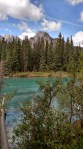
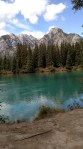
Click on the images in the gallery below to start slide show.


August 13, 2016: White Stout

This recipe was adapted from Experimental Homebrewing. This recipe will require us to expand our techniques in making a cacao tincture and adding lactose at packaging. Ingredients marked with a * were substitutions from the published recipe.

Grain bill:

  • All supplies were purchased at Hops and Berries in Fort Collins, CO. Grain suppliers varied.
  • 14 lbs Maris Otter
  • 0.5 lb Crystal 40L
  • 1 lb Flaked Oats
  • 1 lb Flaked Barley

Hops (Pellet):

  • 1.25 oz Target (UK) 11.1% alpha acids*
  • 0.75 oz Crystal 4.8% alpha acids

Yeast:

  • Wyeast 1318 London Ale III (#0829188, mfg 7/6/2016)

Specialty Ingredients:

  • Defatted cacao extract (4 oz raw cacao nibs soaked in 6 oz Kirkland vodka for 24 hours, strained, placed in freezer to solidify fat for removal)
  • Cold brewed coffee extract (1 c. ground coffee soaked in 3 c. water overnight, strained)
  • 0.75 lb lactose dissolved in 3 c. boiling water.

Stats:

  • Starting gravity: 1.062
  • Brewhouse efficiency: 66%
  • Final gravity: 1.016
  • Approximate %ABV: 5.9%
  • Approximate IBUs: 67.7 (Rager)/60.9 (Tinseth)/33.2 (Garetz)/69.2 (Daniels) as determined using the Hopsteiner, ProBrewer.com, and Homebrewing.com IBU calculators.

Procedure:

Yeast was propagated in 1 L of media (0.5 c DME in 1L/~1qt water, boiled) in a 2L flask with stir bar that had been sanitized with boiling water. Media was inoculated from Wyeast Smack Pack. Propagation culture was grown at room temperature with stirring for 15 hours and was pitched directly into the cooled, oxygenated wort.

Strike temperature was 75.5 degrees Celsius. A ~2:1 water to grist ratio was achieved with 12 liters of water. Mash in temperature was 67.7 degrees Celsius, which was the desired target. Mash out was conducted at 77 degrees Celsius. Sparging was a combination fly/batch and was conducted at 75 degree Celsius until the volume of sweet wort in the boil kettle was approximately 9 gallons. Hydrometer reading of the last wort remaining in the mash tun was 4.0 Brix.

Sweet wort was brought to a vigorous boil and boiled for 90 minutes. All hop addition times are listed as time remaining in the boil. Target pellets – 60 minutes; Crystal pellets, and 1/2 tablet Whirlfloc – 10 minutes. After whirlpooling and allowing the trub to settle, the hopped wort was cooled to 20 degrees Celsius with a counter-flow plate chiller with a recirculating ice/water slurry. The hopped wort was oxygenated via an oxygen tank for 60 seconds. The yeast propagation culture (~800 mL) was pitched into the Speidel fermenter. The fermenter was placed in an incubator that was set to a maximum temperature of 20 degrees Celsius.

Primary fermentation was approaching completion at approximately 100.5 hours. Acetaldehyde was detected around 64 hours and was less noticeable at 100.5 hours. Green was transferred to secondary fermenter and was kept at 70 degrees Celsius for approximately 48 hours. The fermenter was then chilled to -2 degrees Celsius which will help precipitate proteins and any remaining yeast cells. The cold incubation proceeded for two weeks since we were traveling for vacation.

Fermentation profile of the white stout.

The beer was then transferred to a 1/3 keg. Also added to the keg were the specialty ingredients listed above. The keg was sealed, pressurized to 30 psi, and then rolled. Pressurization and rolling was repeated once. Tasting notes will follow.

Comments:

  • The specific gravity was lower than anticipated. During our boil, we reduced the vigor which then reduced the evaporation and thus concentration of the hopped wort. However, comparing the total Brix of the sweet (114) and hopped (91) worts, the hopped wort was approximately 20 points lower than expected. It is possible that our volume was larger than estimated, indicating that we reduced the heat too dramatically during our boil. This may result in higher DMS concentrations.
  • Acetaldehyde was released by the yeast, as determined by the ‘cidery’ smell during fermentation, noted around 40 hours. The aroma was less noticeable around 60 hours.
  • The fermentation was slower than expected. Yeast strain attenuates 70 – 75% and finishes slightly sweet (WYeast Technical Bulletin).
  • Initially lactose amount was 1 lb, but was reduced due to the under attenuation observed and the yeast characteristic of finishing slightly sweet; we were concerned of having the final product too sweet.

Tasting Notes: Amber Ale v 3.0

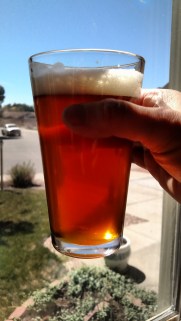
We kegged the amber ale version 3.0 2 weeks ago before we left on our Northern Rockies adventure. We have rechristened it an Imperial Amber Ale; a higher extraction efficiency resulted in a higher ABV.

AmberAle3
A pint of our imperial amber ale.

We are thrilled with the results of our first Colorado home brew. The color is a robust amber and the beer is clear. It is like looking through amber colored glasses. The head is white and generates lovely lacing as the glass is drained.

The aromas are of malt, dried cherries, with hints of floral and citrus. On the palate, this beer is malt forward followed by a mild bitterness. Despite the high calculated ABV, there is no alcohol burn when drinking this beer.

Only challenge we face now is reproducing this beer consistently. We hope we are wildly successful in that goal.

Northern Rockies: Little Bighorn Battlefield National Monument

Little Bighorn Battlefield National Monument:

The monument is located on the Crow Reservation and is just off of I-90 near Crow Agency, Montana.

History

The battle of Little Bighorn/Greasy Grass was one of the last armed efforts of the Northern Plains Indians to preserve their culture. This battle was also where Custer and the five companies under his leadership, were wiped out.

The Indian encampment along the Little Bighorn River numbered approximately 7,000 people from the Lakota, Cheyenne, and Arapaho tribes. Of this number, there were approximately 1,500 to 2,000 warriors. The tribes were led by Sitting Bull and they refused to be restricted to a reservation, preferring a nomadic way of life.

Lt. Colonel George Custer’s decisions on the battlefield remain controversial. President Ulysses S. Grant criticized Custer’s actions, saying it was Custer’s folly and hubris that resulted in the massacre. It should be noted that Custer had implicated Grant’s brother in an Army supply price gouging scheme, had arrested Grant’s son for drunkenness, and was writing articles critical of President Grant. Grant, in turn, had Custer arrested and ordered to stand for court martial. Other army leaders blamed the incompetence of Custer’s subordinate officers for the massacre.

To further the complexity of the situation, Custer was believed to have entered a traditional marriage with Mo-nah-se-tah, daughter of Little Rock, a Cheyenne chief. This was rumored marriage was in addition to the marriage he had with Elizabeth Bacon, whom he married in 1864. Custer had also promised Stone Forehead (Medicine Arrows), a Cheyenne chief and Keeper of the Medicine Arrows, that Custer would never fight against Native Americans again. Custer also told his Native American scout, Bloody Knife, that if he was victorious in his last Indian campaign, he would run for president and use the power of the office to protect Native Americans.

Impact

How would history be different if Custer had kept his promise to Stone Forehead? If white settlers and the US government could have treated Native Americans with respect? We unfortunately will never know in this universe.

Gallery

Click on a picture below to enlarge the image and enable the slideshow option.